VFF - The signal in the noise
NewsTrending

Illinois Passes AI Safety Audit and Whistleblower Bill
Read original
Share
Illinois Passes AI Safety Audit and Whistleblower Bill

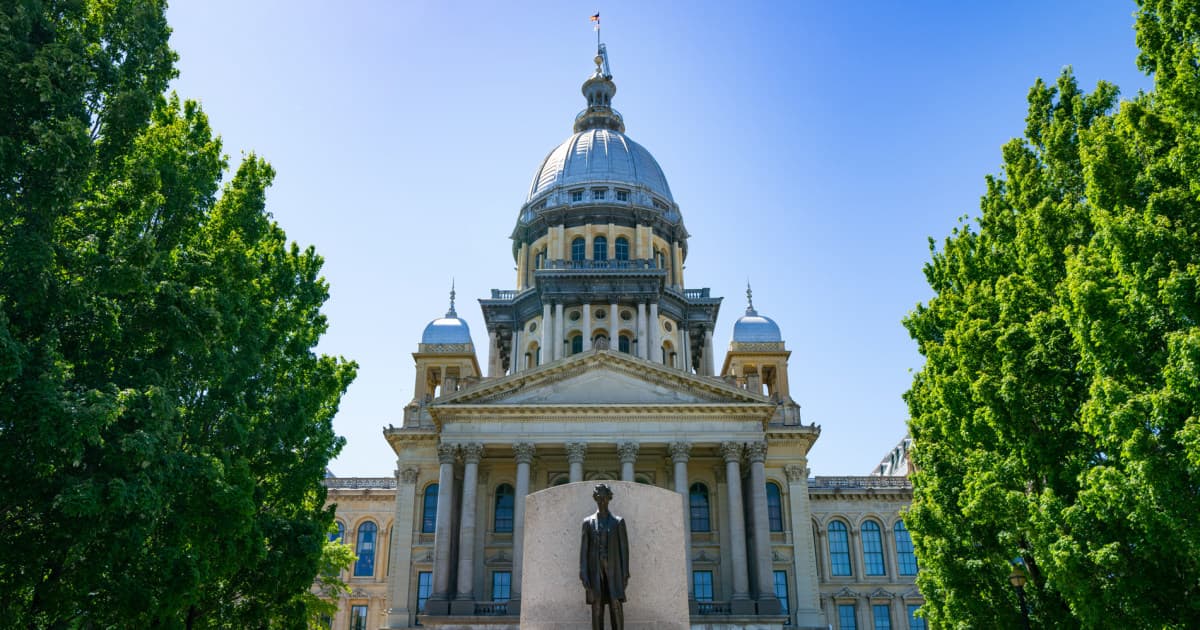
The Illinois House of Representatives passed legislation requiring major AI companies to submit model safety plans for third-party audits and establishing whistleblower protections for their employees. The bill awaits Governor JB Pritzker's signature. The measure represents one of the first state-level regulatory efforts targeting AI safety practices directly.

  • Illinois House passed AI safety bill requiring third-party audits of major AI company model safety plans
  • Legislation includes whistleblower protections for employees at AI companies
  • Bill pending Governor Pritzker's signature to become law
  • Represents early state-level regulatory action on AI safety practices

This legislation signals growing state-level momentum for AI regulation ahead of potential federal action. It establishes a precedent for requiring transparency and independent verification of AI safety measures, which could influence how other states approach AI governance. The whistleblower protections reflect concerns about internal accountability within AI companies.

AI companies operating in Illinois will face new compliance requirements around safety audits and documentation. The whistleblower provisions create potential legal exposure for companies that retaliate against employees raising safety concerns. This could establish a template for similar requirements in other states, creating fragmented regulatory obligations.

  • Major AI companies will need to develop formal safety audit processes and documentation for state compliance
  • Third-party audit requirements could create new business opportunities for AI safety consulting and auditing firms
  • Whistleblower protections may increase internal reporting of safety issues and regulatory scrutiny of company practices

Monitor whether Governor Pritzker signs the bill and how AI companies respond to the new requirements. Track whether other states introduce similar legislation, potentially creating a patchwork of state-level AI regulations. Watch for how major AI companies structure their safety audit processes to comply.

Related Video

Share

Subscribe to the newsletter

The latest stories and analysis, delivered to your inbox.

Free. No spam. Unsubscribe any time.

Related stories

ScienceSoft builds HIPAA-compliant AI voice scheduler on AWS

ScienceSoft builds HIPAA-compliant AI voice scheduler on AWS

ScienceSoft has built a HIPAA-compliant AI voice scheduler using Amazon Nova Sonic and Amazon Bedrock Guardrails on AWS infrastructure. The solution addresses healthcare scheduling inefficiencies, where traditional phone-based workflows consume 30 percent of staff time and result in 30 percent call abandonment rates. The AI patient scheduling software market is projected to grow from $260 million in 2023 to over $1.2 billion by 2030, making this a high-stakes application area for responsible AI deployment.

by Kunmi Adubi· AWS Machine Learning Blog
The AI Evaluation Gap: Agents Outpacing Assurance

The AI Evaluation Gap: Agents Outpacing Assurance

Half of enterprises have deployed AI agents that passed internal evaluations but still failed in production, yet 66% are expanding autonomous deployment without human review. Only 5% trust their automated evaluation systems, creating a widening gap between the speed of agent autonomy and the assurance mechanisms to govern it. The mismatch reflects a broader pattern where companies ship agents first and retrofit control layers later.

by carl.franzen@venturebeat.com (Carl Franzen)· VentureBeat AI
Multi-Model AI Systems Fail More Often Than Enterprises Realize

Multi-Model AI Systems Fail More Often Than Enterprises Realize

A study of 67 frontier models from 21 providers reveals that enterprises using multiple AI models significantly underestimate failure rates by 2.25x due to a phenomenon called the co-failure ceiling. The research shows that combining diverse models based on low pairwise error correlation does not reliably improve performance, and in some cases can degrade it when models have unequal capabilities. Developers are investing in complex routing infrastructure and multi-model orchestration that often fails to deliver promised safety benefits.

by bendee983@gmail.com (Ben Dickson)· VentureBeat AI
Bernanke Joins Anthropic's Governance Trust

Bernanke Joins Anthropic's Governance Trust

Anthropic's Long-Term Benefit Trust appointed former Federal Reserve Chair Ben Bernanke as its fourth member on Thursday. The trust is responsible for appointing board members for the AI safety company. Bernanke's appointment fills a key opening, though the trust still has one vacant seat of its five total positions.

by Cory Weinberg· The Information