VFF - The signal in the noise
Research

US Data Centers Burn More Power Than Countries, Study Finds

Read original
Share
US Data Centers Burn More Power Than Countries, Study Finds

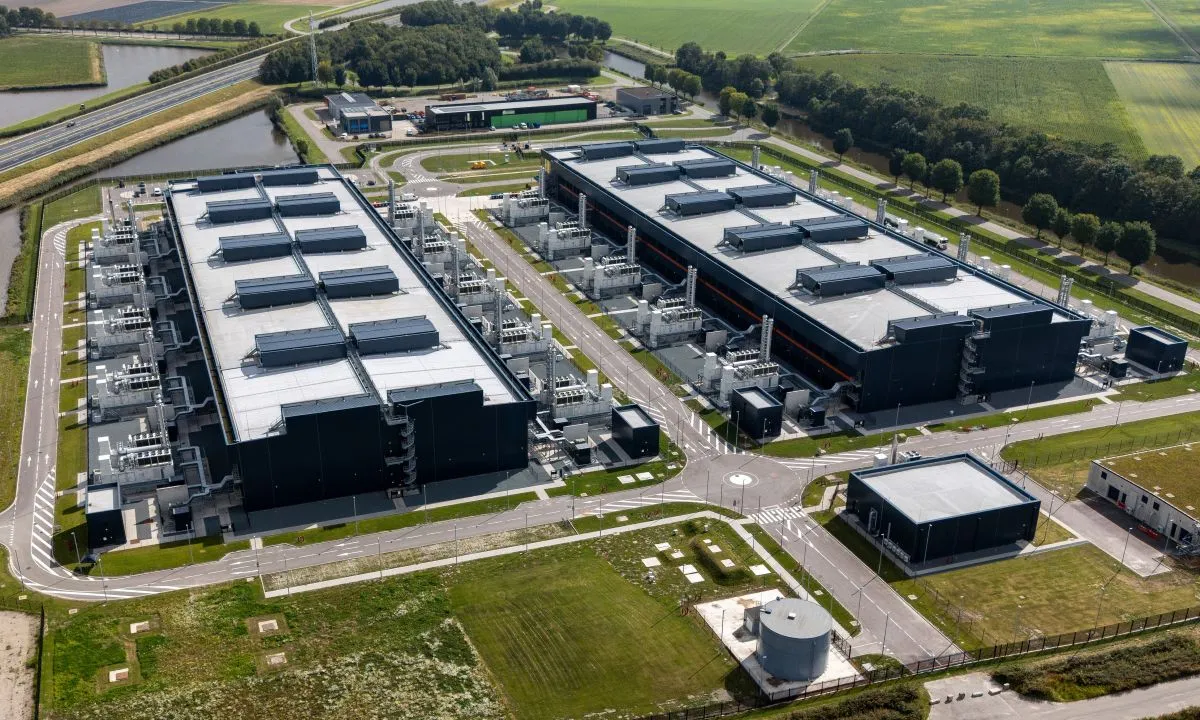
A new study published in Nature Sustainability found that US hyperscale data centers, built primarily to support generative AI, collectively consume more electricity than many countries and rely heavily on fossil fuels as their primary energy source. The research highlights significant greenhouse gas emissions from AI infrastructure and underscores the work needed to reduce the environmental footprint of AI's power demands.

  • US hyperscale data centers consume more electricity collectively than many countries
  • Fossil fuels remain the dominant energy source for these massive facilities
  • The facilities are being built at scale to support generative AI applications
  • Study published in Nature Sustainability shows substantial greenhouse gas emissions from AI infrastructure

As generative AI adoption accelerates, the energy demands of supporting infrastructure are becoming a material environmental and climate concern. The reliance on fossil fuels for powering data centers means AI's carbon footprint is substantial and growing, raising questions about the sustainability of current AI deployment models.

Companies investing in or relying on hyperscale data center capacity face potential regulatory pressure, energy cost volatility, and reputational risk tied to carbon emissions. Energy sourcing and efficiency will increasingly factor into competitive positioning and operational costs for AI-dependent businesses.

  • Energy sourcing for AI infrastructure requires urgent attention from both operators and policymakers to shift away from fossil fuel dependence
  • The scale of data center electricity consumption creates leverage points for climate policy intervention and corporate sustainability commitments
  • Companies building AI systems need to account for the full environmental cost of compute, which may influence deployment decisions and pricing models

Monitor whether hyperscale data center operators commit to renewable energy targets and whether those commitments translate to actual grid changes. Watch for regulatory responses, including potential carbon pricing or energy efficiency mandates for data centers, and track whether major AI companies adjust their infrastructure investment strategies based on environmental concerns.

OneUpAI
OneUp Your Business. Get More Done. OneUp Your Business. Get More Done. OneUp Your Business. Get More Done.
Learn More
Share

Subscribe to the newsletter

The latest stories and analysis, delivered to your inbox.

Free. No spam. Unsubscribe any time.

Related stories

Microsoft-ByteDance Deal Tests OpenAI's AI Export Restrictions

Microsoft-ByteDance Deal Tests OpenAI's AI Export Restrictions

ByteDance is in advanced negotiations to spend approximately $500 million additional on Microsoft Azure cloud services, primarily to access OpenAI models. OpenAI has complained to Microsoft that Chinese firms are using its models to create competing AI systems through a process called distilling, though OpenAI restricts most Chinese companies from direct access while Microsoft does not impose equivalent restrictions.

by Qianer Liu· The Information
NVIDIA Rubin HPC Targets Agent-Driven Science Simulations
TrendingNews

NVIDIA Rubin HPC Targets Agent-Driven Science Simulations

NVIDIA announced Rubin HPC, a new GPU designed to accelerate simulations for scientific discovery and engineering workflows, at SC26. The chip features over 50,000 CUDA cores and sparse data acceleration to keep compute units fed with data, plus seventh-generation NVLink interconnect technology. The GPU targets the growing demand from AI agents exploring candidate materials, molecules, and designs that require rapid simulation feedback. Availability is expected in 2028.

by Dan Ernst· NVIDIA Blog (AI)
NVIDIA Integrates Quantum Processors Into Slurm Supercomputing Standard

NVIDIA Integrates Quantum Processors Into Slurm Supercomputing Standard

NVIDIA has expanded Slurm, the widely used job scheduler for supercomputing centers, to integrate quantum processors alongside classical computing resources. Nearly 30 supercomputing centers globally are deploying over 50 quantum processors, and the update allows quantum hardware builders to create a single interface compatible across all centers. The expansion builds on existing quantum-HPC interfaces and enables scientists to run hybrid quantum-classical applications without custom integration work at each deployment.

by Sam Stanwyck· NVIDIA Blog (AI)
Blackstone Bets $5B on AWS Data Centers

Blackstone Bets $5B on AWS Data Centers

Blackstone Digital Infrastructure Trust is acquiring a 75% stake in two joint ventures with Amazon Web Services to build out a data center portfolio focused on long-term lease agreements with major cloud providers. The $5 billion deal marks Blackstone's entry into a strategy of owning data center assets backed by stable, contracted revenue from hyperscalers. This positions Blackstone to capitalize on growing demand for cloud infrastructure while securing predictable cash flows from AWS.

by Alex Eichenstein· The Information