VFF - The signal in the noise
News

Inference Startups Face Compute Crunch, Forced to Buy Chips

Read original
Share
Inference Startups Face Compute Crunch, Forced to Buy Chips

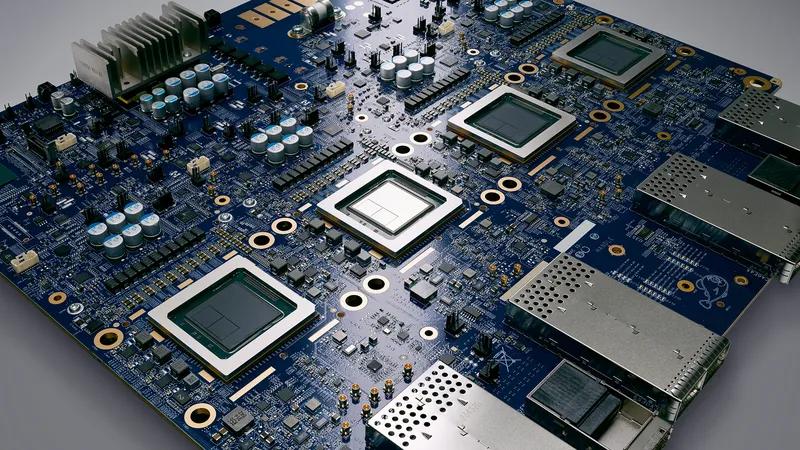
AI inference startups that have built business models by leasing compute from cloud providers and reselling it are now facing capacity constraints, forcing some to purchase their own chips. This shift threatens the asset-light economics that made these startups attractive. The move also reflects broader pressure on compute availability across major hyperscalers, pushing some startups toward smaller cloud providers, which introduces new operational and security risks.

  • Inference startups built on leasing and reselling cloud compute are hitting capacity limits
  • Some are now buying their own chips, fundamentally changing their business model economics
  • Capacity pressure is driving startups to source compute from smaller neocloud providers instead of major hyperscalers
  • Recent security incident at Fireworks highlights risks of relying on fragmented compute infrastructure

The shift signals that the current cloud infrastructure cannot keep pace with AI inference demand, even as startups attempt to arbitrage compute pricing. This creates a structural constraint on how the AI services market can scale and may reshape which business models remain viable in the space.

For investors and operators in AI services, this indicates that asset-light models may not be sustainable long-term. Companies will need to either secure dedicated compute capacity or accept margin compression, fundamentally altering unit economics and competitive positioning.

  • The asset-light inference startup model is under pressure and may not scale without capital-intensive chip purchases
  • Hyperscalers may face continued capacity constraints that push customers toward smaller, less reliable providers
  • Fragmentation of compute sourcing across multiple neocloud providers introduces operational complexity and security vulnerabilities

Monitor whether inference startups continue to acquire chips and what impact this has on their margins and funding requirements. Track how many startups shift to multi-provider compute strategies and whether security incidents increase as a result. Watch for consolidation or partnerships between inference startups and neocloud providers.

OneUpAI
OneUp Your Business. Get More Done. OneUp Your Business. Get More Done. OneUp Your Business. Get More Done.
Learn More
Share

Subscribe to the newsletter

The latest stories and analysis, delivered to your inbox.

Free. No spam. Unsubscribe any time.

Related stories

Google DeepMind Advances Robot Dexterity with Gemini 2.5
TrendingModel Release

Google DeepMind Advances Robot Dexterity with Gemini 2.5

Google DeepMind has released Gemini Robotics 2.5, an updated vision-language-action model designed to improve robot dexterity, reliability, and safety in physical tasks. The model represents an advancement in enabling robots to perform complex real-world manipulation with greater precision and dependability. The release signals continued progress in translating large language models into embodied AI systems capable of autonomous physical work.

· Google Deepmind
Mosaic Raises $47M for AI-Guided Surgical Catheters
TrendingNews

Mosaic Raises $47M for AI-Guided Surgical Catheters

Mosaic Intelligence Labs, a one-year-old surgical robotics startup, has raised $47 million in seed funding led by 8VC and Fundomo to develop semi-autonomous catheters that can navigate blood vessels during surgery. The company represents a new wave of AI-powered robotics firms challenging Intuitive Surgical's dominance in the surgical automation space, which has been led by the da Vinci Surgical System for over 25 years. Mosaic's technology aims to further automate surgery by combining AI advances with human surgeon control, allowing catheter tips to bend and find their own path through the vascular system.

by Rocket Drew· The Information
Google Launches Faster, More Secure TPU Chips to Challenge Nvidia
TrendingNews

Google Launches Faster, More Secure TPU Chips to Challenge Nvidia

Google announced two new tensor processing units, the TPU 8tx and TPU 8i Max, designed to handle heavier AI workloads with improved security compared to previous generations. The chips represent an expansion of Google's growing chip business and pose a competitive challenge to Nvidia's dominance in the AI hardware market. The announcement underscores a broader industry shift toward custom silicon for AI applications.

by Ryan Barwick· The Information
NVIDIA and Korea Deepen Sovereign AI Partnership
TrendingNews

NVIDIA and Korea Deepen Sovereign AI Partnership

NVIDIA and South Korea's Ministry of Science and ICT are expanding collaboration across the country's sovereign AI ecosystem, covering semiconductors, data center infrastructure, talent development, and security. The partnership includes training programs, hackathons, and technical seminars to strengthen GPU utilization, plus work with Korean foundation model builders using NVIDIA Dynamo software. NVIDIA also announced a separate collaboration with SK Telecom and Rebellions to advance sovereign AI infrastructure using NVIDIA NVLink Fusion technology.

by Jesse Clayton· NVIDIA Blog (AI)