Biologically Inspired AI Agents Learn to Self-Monitor
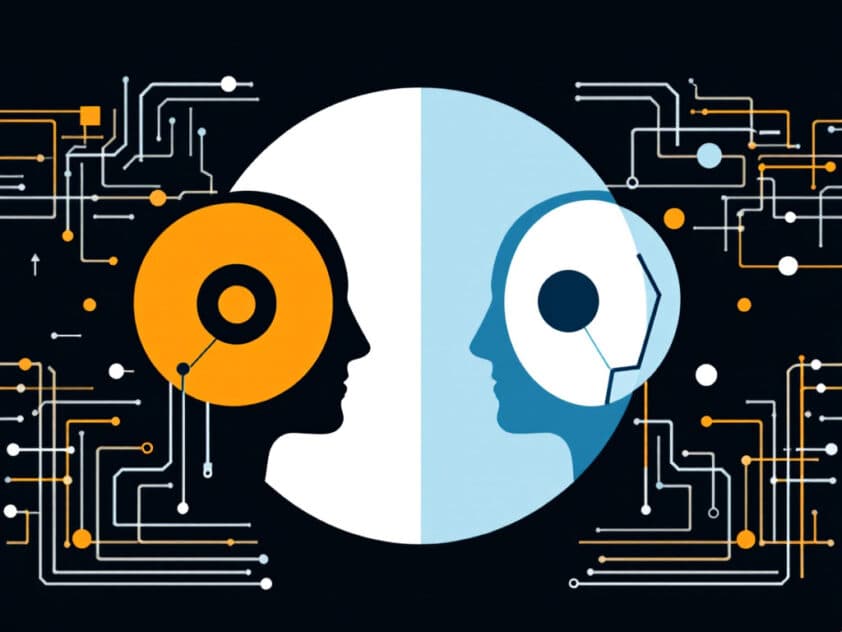
Researchers led by Sungwoo Lee propose interoception, a biologically inspired framework, as a foundation for building more autonomous and adaptive AI agents. The approach draws from how living organisms sense and respond to internal states to improve machine learning systems. The work, published in Nature Machine Intelligence, suggests that incorporating interoceptive mechanisms could enable AI systems to better self-monitor and adjust behavior without constant external guidance.
TL;DR
- Interoception, the biological ability to sense internal states, is proposed as a framework for autonomous AI agents
- The approach is inspired by how living organisms maintain adaptive behavior through internal state awareness
- Research published in Nature Machine Intelligence by Lee, Oh et al.
- Framework aims to reduce reliance on external supervision and improve agent autonomy
Why It Matters
Current AI systems often require extensive external feedback and supervision to function effectively. By adopting interoceptive principles from biology, AI agents could develop self-awareness of their operational state, enabling more robust autonomous behavior in dynamic environments. This represents a shift toward AI systems that can self-regulate and adapt without constant human intervention.
Business Impact
Autonomous AI agents with improved self-monitoring capabilities could reduce operational costs and human oversight requirements in deployment. Industries relying on autonomous systems, from robotics to autonomous vehicles to industrial automation, could benefit from agents that adapt and self-correct based on internal state awareness rather than external correction loops.
Key Implications
- AI agents could operate with greater autonomy by leveraging internal state sensing mechanisms similar to biological systems
- Reduced need for external supervision and feedback loops in deployed AI systems
- Potential for more robust and adaptive behavior in dynamic, unpredictable environments
What to Watch
Monitor whether interoceptive frameworks improve real-world performance of autonomous agents in practical applications. Track adoption of this approach across robotics, autonomous systems, and other domains requiring high autonomy. Watch for follow-up research validating whether biological inspiration translates to measurable improvements in agent efficiency and adaptability.
Subscribe to the newsletter
The latest stories and analysis, delivered to your inbox.
Free. No spam. Unsubscribe any time.