Inscribe Uses Bedrock to Detect Document Fraud in 90 Seconds
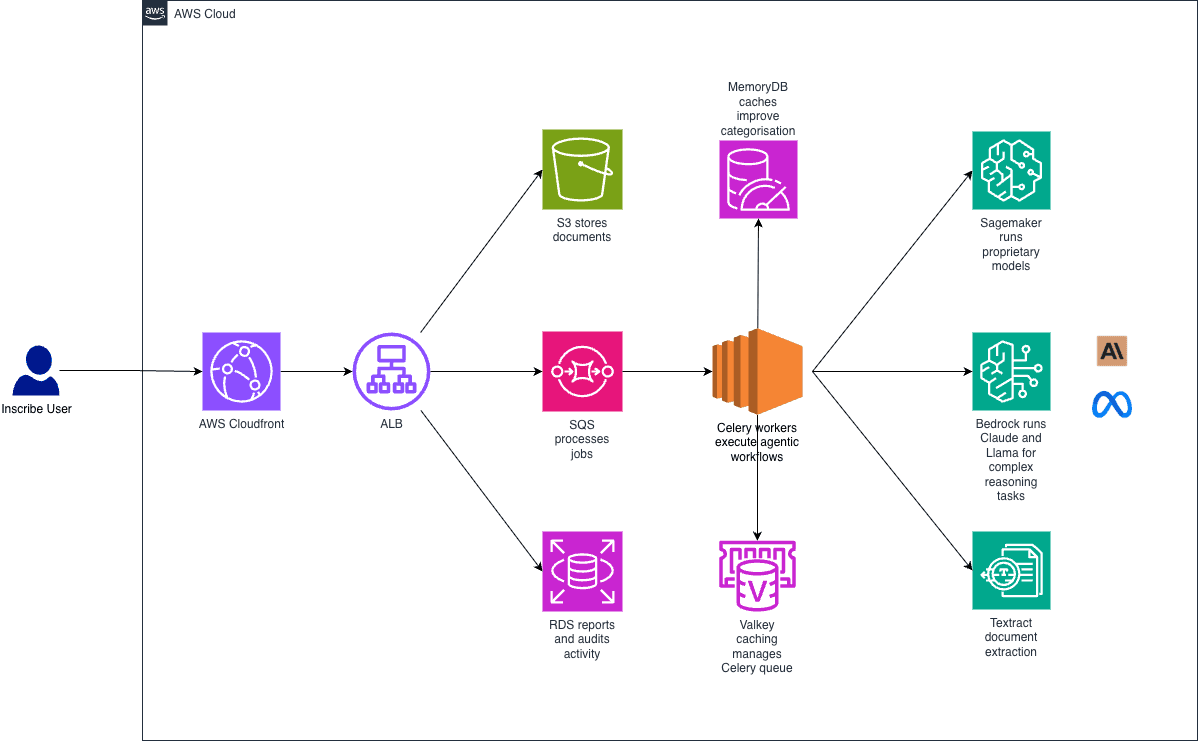
Inscribe, a document fraud detection company, has built an agentic AI system using Amazon Bedrock that identifies tampered, fabricated, and AI-generated financial documents in under 90 seconds, a 20x improvement over manual review. The system addresses a growing problem: fraud now appears in 1 of every 16 documents, with AI-generated forgeries growing 5x from April to December 2025. Financial institutions face mounting pressure to balance speed with accuracy as fraudsters deploy increasingly sophisticated tactics including deepfakes and synthetic identity schemes.
TL;DR
- Fraud appears in 1 of every 16 documents, with AI-generated forgeries up 5x in 2025
- Inscribe's agentic AI system detects document fraud in under 90 seconds versus 30 minutes for manual review
- The system uses Amazon Bedrock to reason across documents like an expert fraud analyst
- Solution maintains regulatory compliance and explainability while achieving 20x speed improvement
Why It Matters
Document fraud is accelerating as AI tools make forgery easier and more convincing. Manual review cannot scale with application volumes or keep pace with evolving fraud tactics. Automated detection that maintains accuracy and explainability is becoming essential infrastructure for financial institutions managing thousands of daily applications.
Business Impact
Banks and lenders face direct losses from missed fraud cases, regulatory exposure for financial crime failures, and customer abandonment from slow approval processes. Automating fraud detection reduces analyst hiring costs, improves consistency across cases, and enables faster customer decisions that reduce abandonment rates while catching sophisticated schemes that static rule-based systems miss.
Key Implications
- Agentic AI systems can handle complex, multi-document reasoning tasks that previously required human expertise, creating opportunities for automation in compliance and risk functions
- Foundation models accessed through managed services like Amazon Bedrock enable smaller companies to build sophisticated AI applications without maintaining proprietary model infrastructure
- Financial institutions must adopt AI-powered fraud detection to remain competitive as fraud sophistication and volume increase, making this a table-stakes capability rather than a differentiator
What to Watch
Monitor adoption rates of agentic AI systems in financial services compliance and risk functions. Track whether regulatory frameworks evolve to accommodate AI-driven decision-making while maintaining explainability requirements. Watch for competitive pressure on fraud detection vendors as foundation models become more accessible and capable.
Subscribe to the newsletter
The latest stories and analysis, delivered to your inbox.
Free. No spam. Unsubscribe any time.


