VFF - The signal in the noise
NewsTrending

Chinese AI Matches U.S. Leader in Cybersecurity Capabilities
Read original
Share
Chinese AI Matches U.S. Leader in Cybersecurity Capabilities

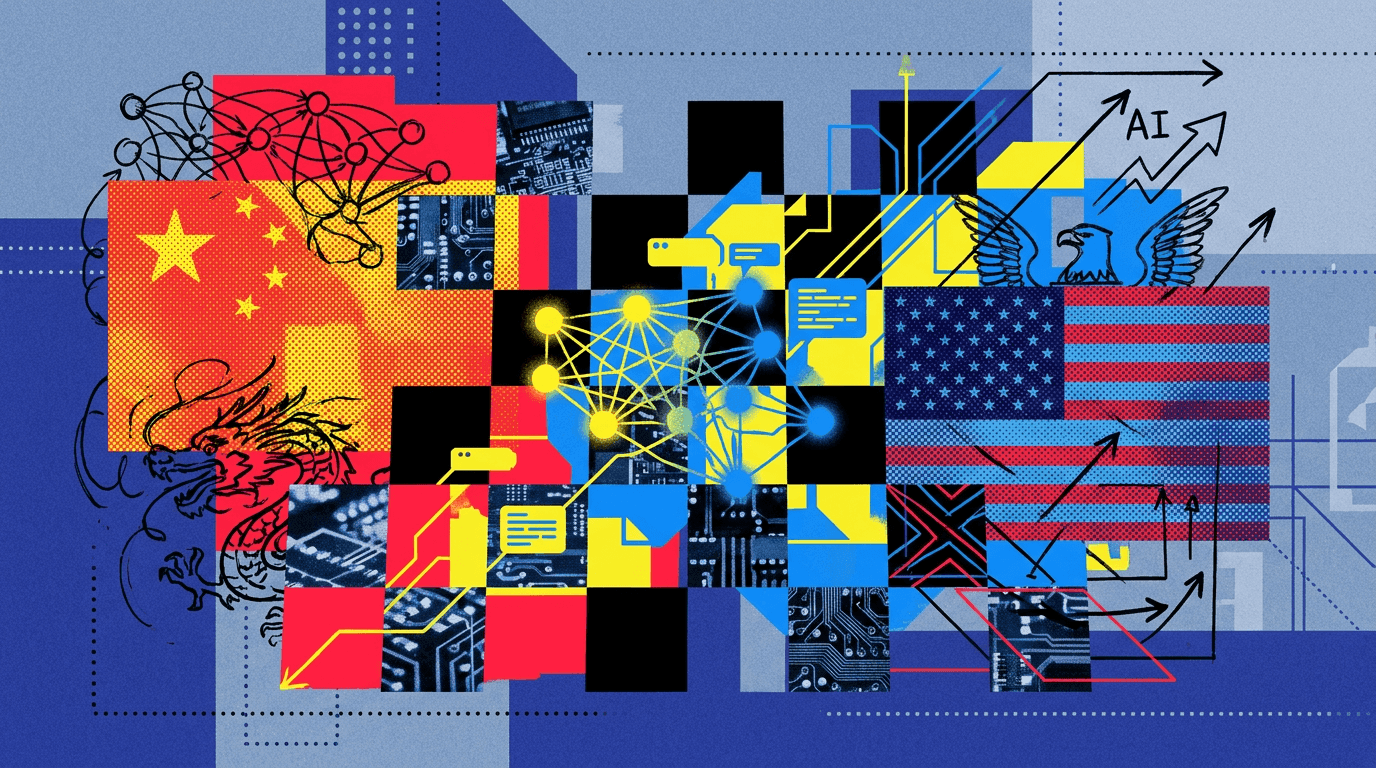
Security researchers have found that Z.ai's GLM-2 model matches Anthropic's Mythos in cybersecurity capabilities, particularly in bug-finding tasks, according to reporting by the Wall Street Journal. The finding signals that Chinese AI systems are closing the gap with leading U.S. models in a critical security domain. This development underscores intensifying competitive pressure from China's AI sector on American technology leadership.

  • Z.ai's GLM-2 model demonstrated parity with Anthropic's Mythos in cybersecurity bug-finding capabilities
  • Security researchers conducted the comparison analysis
  • Finding highlights China's progress in AI capabilities across specialized domains
  • Raises questions about competitive advantage in AI-driven security tools

Cybersecurity AI capabilities are strategically important for both offensive and defensive applications. If Chinese models have achieved feature parity with leading U.S. systems in this domain, it suggests the competitive gap is narrowing faster than previously assumed. This has implications for U.S. technology leadership and the geopolitical stakes around AI development.

Organizations relying on AI-powered security tools may face new competitive dynamics and sourcing decisions. The emergence of capable Chinese alternatives could reshape vendor selection, pricing, and partnership strategies in the cybersecurity software market. Companies developing security AI should monitor capability benchmarks against international competitors.

  • Chinese AI development is advancing rapidly in specialized, high-value domains beyond general-purpose models
  • Cybersecurity AI capabilities may become a competitive commodity rather than a differentiator for U.S. vendors
  • Geopolitical considerations around AI sourcing and data security may intensify for enterprise customers

Monitor whether other Chinese AI models demonstrate similar parity in cybersecurity or other specialized domains. Track how U.S. vendors respond to competitive pressure, including potential capability improvements or market consolidation. Watch for regulatory or policy responses that address AI sourcing in critical security applications.

Share

Subscribe to the newsletter

The latest stories and analysis, delivered to your inbox.

Free. No spam. Unsubscribe any time.

Related stories

ChatGPT logs used as evidence in wildfire arson trial

ChatGPT logs used as evidence in wildfire arson trial

Prosecutors in the trial of Jonathan Rinderknecht, charged with arson for setting a New Year's Day 2025 fire that became one of LA's deadliest wildfires, used ChatGPT logs as evidence. The logs showed Rinderknecht had asked the chatbot to generate images of fire, inquired about personal anger, and questioned whether someone could be blamed for a fire they did not physically light. The case marks a notable instance of AI conversation records being introduced in a criminal prosecution.

by Terrence O’Brien· The Verge AI
AWS Guidance: Securing Agentic AI with Data Mesh Architecture

AWS Guidance: Securing Agentic AI with Data Mesh Architecture

AWS published a technical guide on building agentic AI applications using a modern data mesh architecture that enforces fine-grained access control across multiple data sources. The approach replaces specialized vector databases with Amazon S3 Vectors (reducing costs up to 90%), uses S3 Tables with Apache Iceberg for governed data access, and exposes data through Model Context Protocol tools via AgentCore Gateway with Lambda-backed interceptors. This addresses governance gaps in autonomous AI agents that query databases and synthesize answers across organizational data sources.

by Venkata Sistla· AWS Machine Learning Blog
Anthropic Accuses Alibaba of Unauthorized Claude Model Access
TrendingNews

Anthropic Accuses Alibaba of Unauthorized Claude Model Access

Anthropic has accused Alibaba Group of illicitly accessing its Claude AI models to extract their capabilities in violation of terms of service. In a June 10 letter to U.S. senators, Anthropic stated that Alibaba and its Qwen AI lab generated more than 28.8 million queries against Claude models without authorization. The accusation raises questions about AI model security and competitive practices in the global AI market.

by Henry Siu· The Information
Huntington Bank Redacts 400M Documents in Months Using AWS ML

Huntington Bank Redacts 400M Documents in Months Using AWS ML

Huntington National Bank processed over 400 million documents to redact sensitive customer data using AWS machine learning services, reducing an estimated multi-year effort to months. The bank built a scalable workflow combining Amazon Textract, SageMaker, Step Functions, and Lambda while meeting strict compliance requirements including PCI DSS certification, encryption at rest and in transit, and 95% redaction accuracy. The solution used AWS DataSync and Direct Connect to securely transfer documents from on-premises storage to AWS for processing and back again.

by Rob Carnell· AWS Machine Learning Blog