OpenAI Claims Reasoning Model Solved 80-Year Math Problem
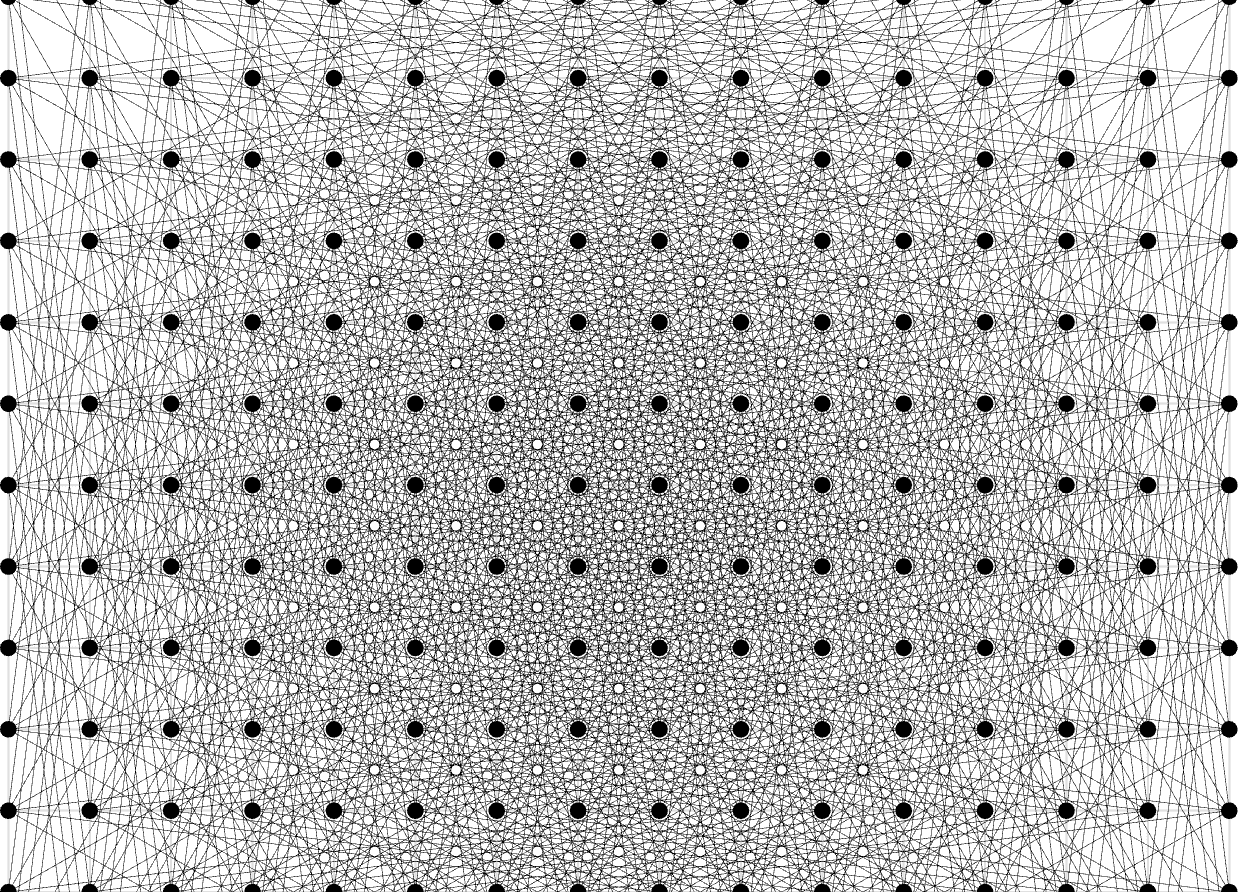
OpenAI claims its reasoning model has disproven a geometry conjecture that has remained unsolved since 1946. The claim carries weight because mathematicians who previously exposed OpenAI's false mathematical claims are now backing up this result. This marks a potential shift in AI's capability to tackle long-standing open problems in pure mathematics, though verification by the broader mathematical community remains pending.
TL;DR
- OpenAI's reasoning model reportedly disproved an 80-year-old geometry conjecture dating to 1946
- Mathematicians who previously caught OpenAI making false claims are now validating this result
- The claim suggests AI reasoning models may be approaching genuine contributions to unsolved mathematical problems
- Independent verification by the mathematical community is still needed to confirm the breakthrough
Why It Matters
This claim, if verified, would represent a meaningful inflection point for AI reasoning capabilities. Previous false claims from OpenAI on mathematical problems damaged credibility, so third-party mathematician validation here signals either genuine progress or a more careful vetting process. The ability to solve long-standing conjectures would demonstrate that AI reasoning models can contribute to fundamental research, not just optimize existing problems.
Business Impact
Demonstrating real mathematical breakthroughs strengthens OpenAI's positioning as a research-grade AI platform and justifies premium pricing for reasoning models. For enterprises and research institutions, this suggests reasoning models may become viable tools for exploratory research and problem-solving in technical domains, expanding use cases beyond code generation and content tasks.
Key Implications
- AI reasoning models may be transitioning from pattern-matching to genuine mathematical discovery, expanding their value proposition beyond applied tasks
- Third-party validation from skeptical mathematicians adds credibility but also raises the bar for future claims, requiring independent verification
- Success on pure math problems could accelerate adoption of reasoning models in academic and research settings, opening new market segments
What to Watch
Monitor whether the mathematical community independently confirms this result and whether OpenAI publishes detailed methodology and proofs. Watch for similar claims from other AI labs and whether reasoning models begin solving other long-standing conjectures. Track how this shapes enterprise and academic adoption of reasoning-focused AI models in research workflows.
Related Video
Subscribe to the newsletter
The latest stories and analysis, delivered to your inbox.
Free. No spam. Unsubscribe any time.