VFF - The signal in the noise
News

Mercury Raises $200M at $5.2B After Bank License Approval
Michael RoddanRead original
Share
Mercury Raises $200M at $5.2B After Bank License Approval

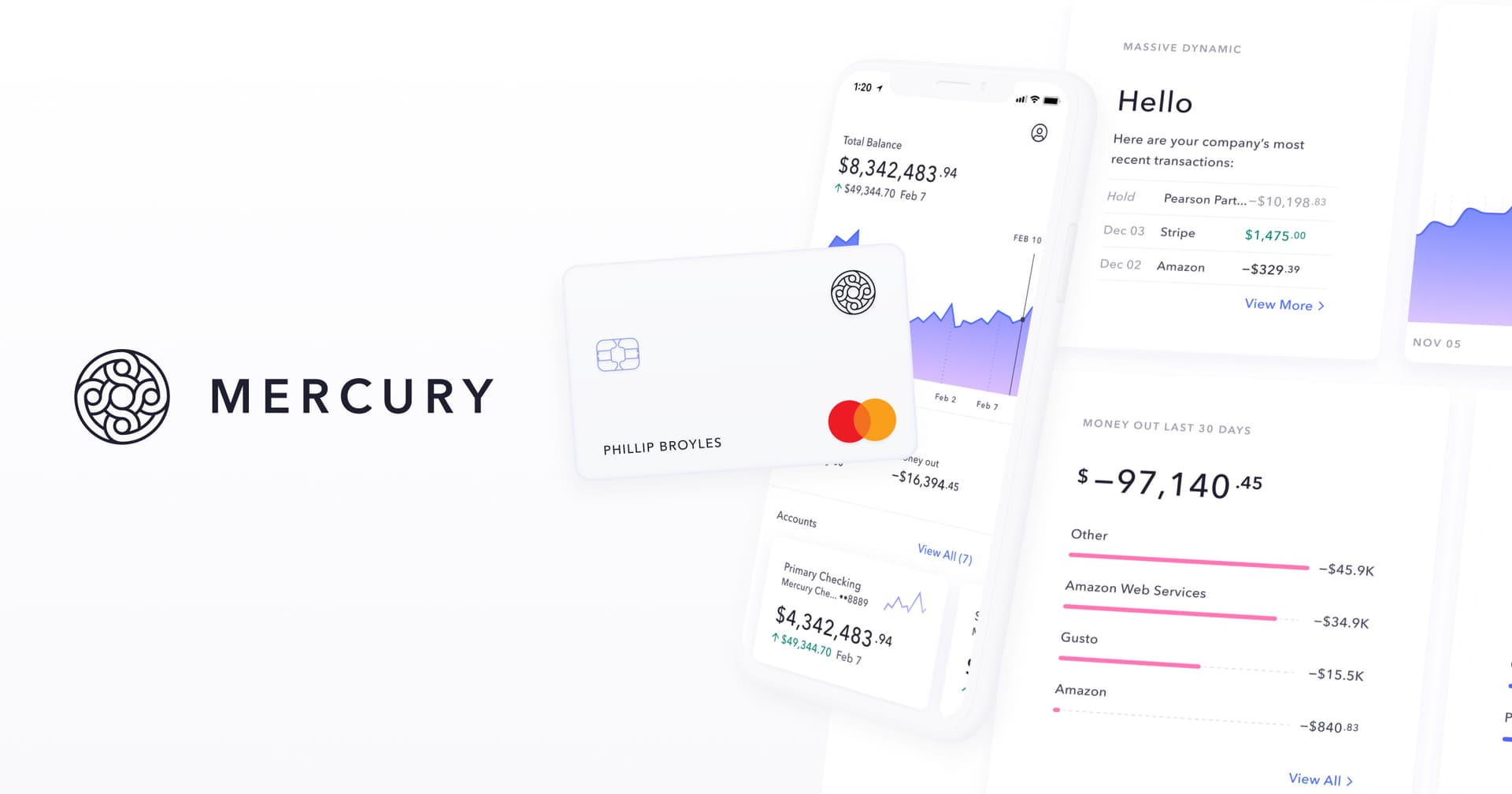
Mercury, a neobank led by CEO Immad Akhund, raised $200 million at a $5.2 billion valuation following conditional regulatory approval for a bank license. The funding round included participation from TCV alongside existing backers like Andreessen Horowitz. The valuation milestone reflects investor confidence in Mercury's path toward full banking operations and positions the fintech startup as a significant player in the neobanking sector.

Mercury, a neobank founded by CEO Immad Akhund, secured $200 million in funding at a $5.2 billion valuation following conditional approval for a bank license from regulators. The round was led by TCV with participation from existing backers including Andreessen Horowitz, signaling strong investor confidence in the company's path to full banking operations. This milestone positions Mercury as a major contender in the competitive neobanking sector.

  • Mercury achieved a $5.2 billion valuation, demonstrating significant investor confidence in its regulatory trajectory and business model.
  • Conditional bank license approval represents a critical inflection point, moving Mercury from fintech to regulated banking operations.
  • TCV's participation alongside Andreessen Horowitz indicates strong institutional backing from top-tier venture capital firms.
  • The $200 million raise provides substantial capital for Mercury to build banking infrastructure and scale operations following license approval.
  • Mercury's success reflects broader investor appetite for neobanks that can achieve regulatory compliance and full banking capabilities.

Bank license approval is a transformational milestone that allows Mercury to operate as a genuine bank rather than merely a fintech intermediary, enabling fuller product offerings and deeper institutional relationships. The $5.2 billion valuation and strong investor backing underscore the market opportunity in regulated digital banking and validate Mercury's execution against regulatory requirements.

Mercury's path to a $5.2 billion valuation reflects the maturation of the neobanking sector and the increasing willingness of regulators to grant banking licenses to well-capitalized fintech companies. The conditional bank license approval is particularly significant because it removes a fundamental constraint on Mercury's business model, allowing the company to hold customer deposits directly rather than through partner banks, reduce operational costs, and offer more competitive products. This regulatory achievement typically takes years to complete and requires demonstrating robust compliance frameworks, capital adequacy, and risk management systems. The participation of TCV, a growth-stage venture capital firm with deep expertise in scaling technology companies, suggests confidence not only in Mercury's regulatory milestone but also in its ability to scale into a large financial institution. Prior to this round, Mercury had secured backing from Andreessen Horowitz and other leading venture firms, but the addition of TCV indicates the company may be approaching growth phase operations requiring the kind of operational scaling expertise TCV provides. The $200 million raise is substantial and likely designed to fund technology infrastructure, compliance operations, talent acquisition, and product development necessary to operate as a bank rather than simply a fintech wrapper around banking services. In the broader context, Mercury's success contrasts with recent challenges faced by other neobanks, including SVB's collapse which highlighted risks in the sector, making Mercury's regulatory clearance particularly valuable as a signal of stability and competence to both investors and customers.

Mercury's achievement reflects a significant evolution in fintech regulation, where demonstrated compliance capabilities and substantial capitalization now provide pathways to direct banking operations. Industry observers note that the conditional bank license approval validates Mercury's technical and operational maturity while positioning the company to compete directly with traditional banks on cost structure and customer experience, fundamentally reshaping competitive dynamics in digital banking.

  1. Monitor Mercury's regulatory filings and timelines for full bank license approval to track the company's progression toward unrestricted banking operations.
  2. Assess Mercury's competitive positioning relative to other neobanks and traditional banks now that it can operate with direct deposit-taking capabilities.
  3. Review Mercury's product roadmap and service announcements following the license approval to understand how the company will differentiate in the broader banking market.
  4. Consider Mercury's role in your fintech or banking sector investment theses, as its success may influence funding patterns and valuations for other regulated fintech companies.
Share

Our Briefing

Weekly signal. No noise. Built for founders, operators, and AI-curious professionals.

No spam. Unsubscribe any time.

Related stories

AI Discovers Security Flaws Faster Than Humans Can Patch Them

AI Discovers Security Flaws Faster Than Humans Can Patch Them

Recent high-profile breaches at startups like Mercor and Vercel, combined with Anthropic's disclosure that its Mythos AI model identified thousands of previously unknown cybersecurity vulnerabilities, underscore growing demand for AI-powered security solutions. The article argues that cybersecurity vendors CrowdStrike and Palo Alto Networks, which are integrating AI into their threat detection and response capabilities, represent undervalued investment opportunities as enterprises face mounting pressure to defend against both conventional and AI-discovered attack vectors.

22 days ago· The Information
AWS Launches G7e GPU Instances for Cheaper Large Model Inference
TrendingModel Release

AWS Launches G7e GPU Instances for Cheaper Large Model Inference

AWS has launched G7e instances on Amazon SageMaker AI, powered by NVIDIA RTX PRO 6000 Blackwell GPUs with 96 GB of GDDR7 memory per GPU. The instances deliver up to 2.3x inference performance compared to previous-generation G6e instances and support configurations from 1 to 8 GPUs, enabling deployment of large language models up to 300B parameters on the largest 8-GPU node. This represents a significant upgrade in memory bandwidth, networking throughput, and model capacity for generative AI inference workloads.

30 days ago· AWS Machine Learning Blog
Anthropic Launches Claude Design for Non-Designers
Model Release

Anthropic Launches Claude Design for Non-Designers

Anthropic has launched Claude Design, a new product aimed at helping non-designers like founders and product managers create visuals quickly to communicate their ideas. The tool addresses a gap for early-stage teams and individuals who need to share concepts visually but lack design expertise or resources. Claude Design integrates with Anthropic's Claude AI platform, leveraging its capabilities to streamline the visual creation process. The launch reflects growing demand for AI-powered design tools that lower barriers to entry for non-technical users.

about 1 month ago· TechCrunch AI
Google Splits TPUs Into Training and Inference Chips

Google Splits TPUs Into Training and Inference Chips

Google is splitting its eighth-generation tensor processing units into separate chips optimized for AI training and inference, a shift the company says reflects the rise of AI agents and their distinct computational needs. The training chip delivers 2.8 times the performance of its predecessor at the same price, while the inference processor (TPU 8i) achieves 80% better performance and includes triple the SRAM of the prior generation. Both chips will launch later this year as Google continues its effort to compete with Nvidia in custom AI silicon, though the company is not directly benchmarking against Nvidia's offerings.

29 days ago· Direct