vff — the signal in the noise
News

Halliburton cuts seismic workflow setup time by 95% with Bedrock AI
Yuan TianRead original
Share
Halliburton cuts seismic workflow setup time by 95% with Bedrock AI

Halliburton partnered with AWS to build an AI-powered assistant for its Seismic Engine, a cloud-native application for seismic data processing. The solution uses Amazon Bedrock, Amazon Nova, and related AWS services to convert natural language queries into executable seismic workflows, replacing a manual process that required configuring approximately 100 specialized tools. The system achieved workflow acceleration of up to 95% and makes complex geophysical tools more accessible to a broader range of users.

TL;DR

  • Halliburton deployed an AI assistant for Seismic Engine using Amazon Bedrock and Amazon Nova to automate workflow creation
  • Geoscientists can now configure processing tools through natural language conversation instead of manual configuration of 100+ specialized tools
  • The solution achieved up to 95% workflow acceleration and includes a Q&A system for Seismic Engine documentation
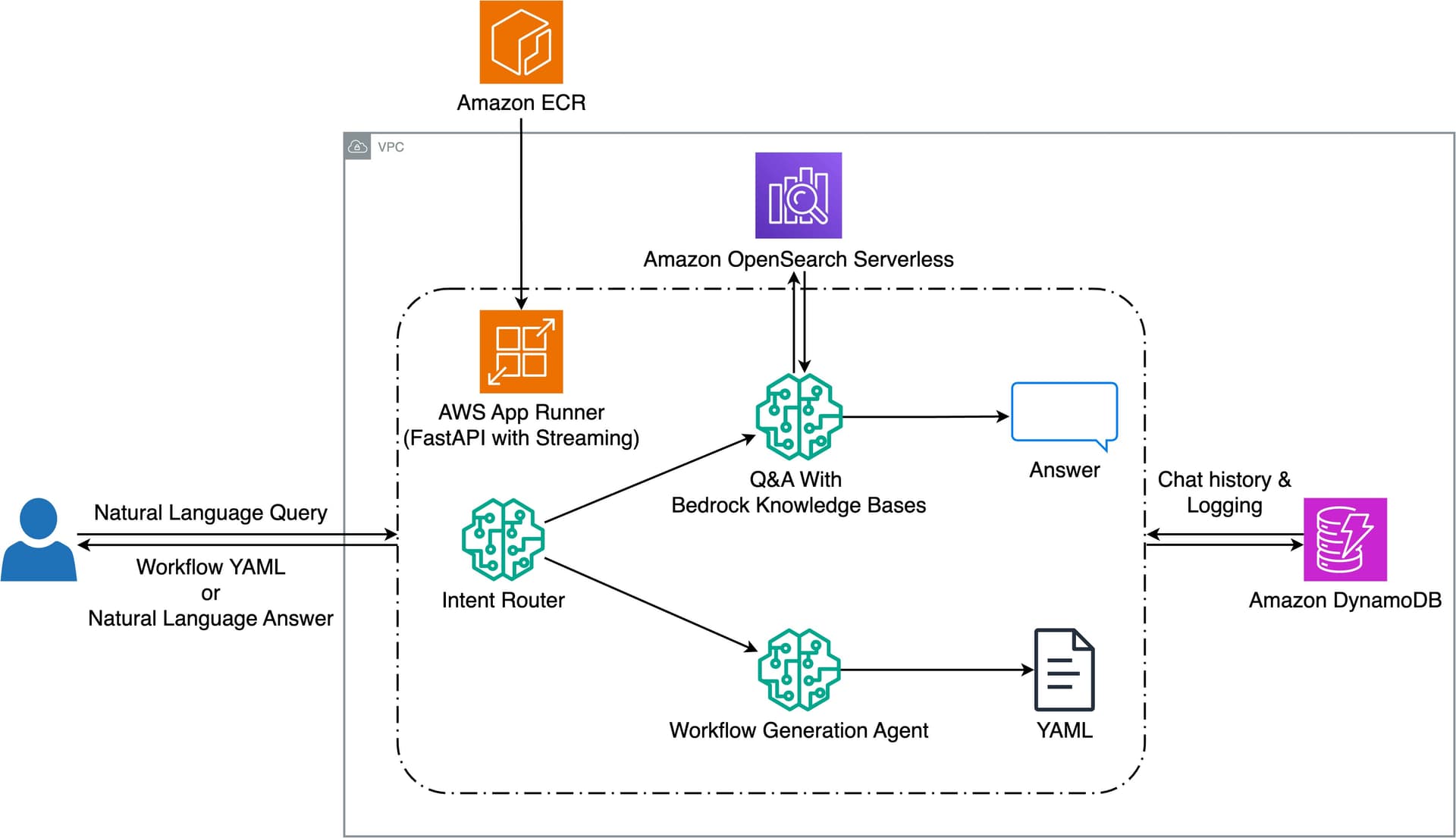
  • Architecture uses FastAPI on AWS App Runner, Amazon DynamoDB for chat history, and Amazon OpenSearch Serverless for knowledge retrieval

Why it matters

This demonstrates how generative AI can meaningfully reduce friction in specialized technical domains by converting complex configuration tasks into conversational interfaces. The 95% acceleration metric suggests that LLM-powered assistants can deliver substantial productivity gains when applied to well-defined, tool-heavy workflows, which has implications for how enterprises approach automation of expert-level tasks.

Business relevance

For energy companies and operators, reducing workflow configuration time by an order of magnitude directly improves project velocity and lowers the expertise barrier for using advanced geophysical tools. This pattern is replicable across other capital-intensive industries with complex technical workflows, making it relevant for founders building AI solutions for enterprise verticals.

Key implications

  • Generative AI can accelerate domain-specific workflows by 10x or more when paired with proper knowledge retrieval and intent routing, suggesting broad applicability beyond energy
  • Cloud-native architecture with serverless components enables scalable AI assistants without requiring significant infrastructure investment from enterprises
  • Intent routing and multi-turn conversation support are critical for production systems that need to handle both workflow generation and documentation queries

What to watch

Monitor whether Halliburton expands this pattern to other Landmark products and whether similar acceleration metrics hold across different tool sets and user expertise levels. Track adoption rates among geoscientists to understand whether the accessibility gains translate to actual usage and whether the system requires ongoing fine-tuning or knowledge base updates.

Share

vff Briefing

Weekly signal. No noise. Built for founders, operators, and AI-curious professionals.

No spam. Unsubscribe any time.

Related stories

AI Discovers Security Flaws Faster Than Humans Can Patch Them

AI Discovers Security Flaws Faster Than Humans Can Patch Them

Recent high-profile breaches at startups like Mercor and Vercel, combined with Anthropic's disclosure that its Mythos AI model identified thousands of previously unknown cybersecurity vulnerabilities, underscore growing demand for AI-powered security solutions. The article argues that cybersecurity vendors CrowdStrike and Palo Alto Networks, which are integrating AI into their threat detection and response capabilities, represent undervalued investment opportunities as enterprises face mounting pressure to defend against both conventional and AI-discovered attack vectors.

10 days ago· The Information
AWS Launches G7e GPU Instances for Cheaper Large Model Inference
TrendingModel Release

AWS Launches G7e GPU Instances for Cheaper Large Model Inference

AWS has launched G7e instances on Amazon SageMaker AI, powered by NVIDIA RTX PRO 6000 Blackwell GPUs with 96 GB of GDDR7 memory per GPU. The instances deliver up to 2.3x inference performance compared to previous-generation G6e instances and support configurations from 1 to 8 GPUs, enabling deployment of large language models up to 300B parameters on the largest 8-GPU node. This represents a significant upgrade in memory bandwidth, networking throughput, and model capacity for generative AI inference workloads.

17 days ago· AWS Machine Learning Blog
Anthropic Launches Claude Design for Non-Designers
Model Release

Anthropic Launches Claude Design for Non-Designers

Anthropic has launched Claude Design, a new product aimed at helping non-designers like founders and product managers create visuals quickly to communicate their ideas. The tool addresses a gap for early-stage teams and individuals who need to share concepts visually but lack design expertise or resources. Claude Design integrates with Anthropic's Claude AI platform, leveraging its capabilities to streamline the visual creation process. The launch reflects growing demand for AI-powered design tools that lower barriers to entry for non-technical users.

18 days ago· TechCrunch AI
Google Splits TPUs Into Training and Inference Chips

Google Splits TPUs Into Training and Inference Chips

Google is splitting its eighth-generation tensor processing units into separate chips optimized for AI training and inference, a shift the company says reflects the rise of AI agents and their distinct computational needs. The training chip delivers 2.8 times the performance of its predecessor at the same price, while the inference processor (TPU 8i) achieves 80% better performance and includes triple the SRAM of the prior generation. Both chips will launch later this year as Google continues its effort to compete with Nvidia in custom AI silicon, though the company is not directly benchmarking against Nvidia's offerings.

17 days ago· Direct