Vanguard's AI lesson: Data architecture beats model selection
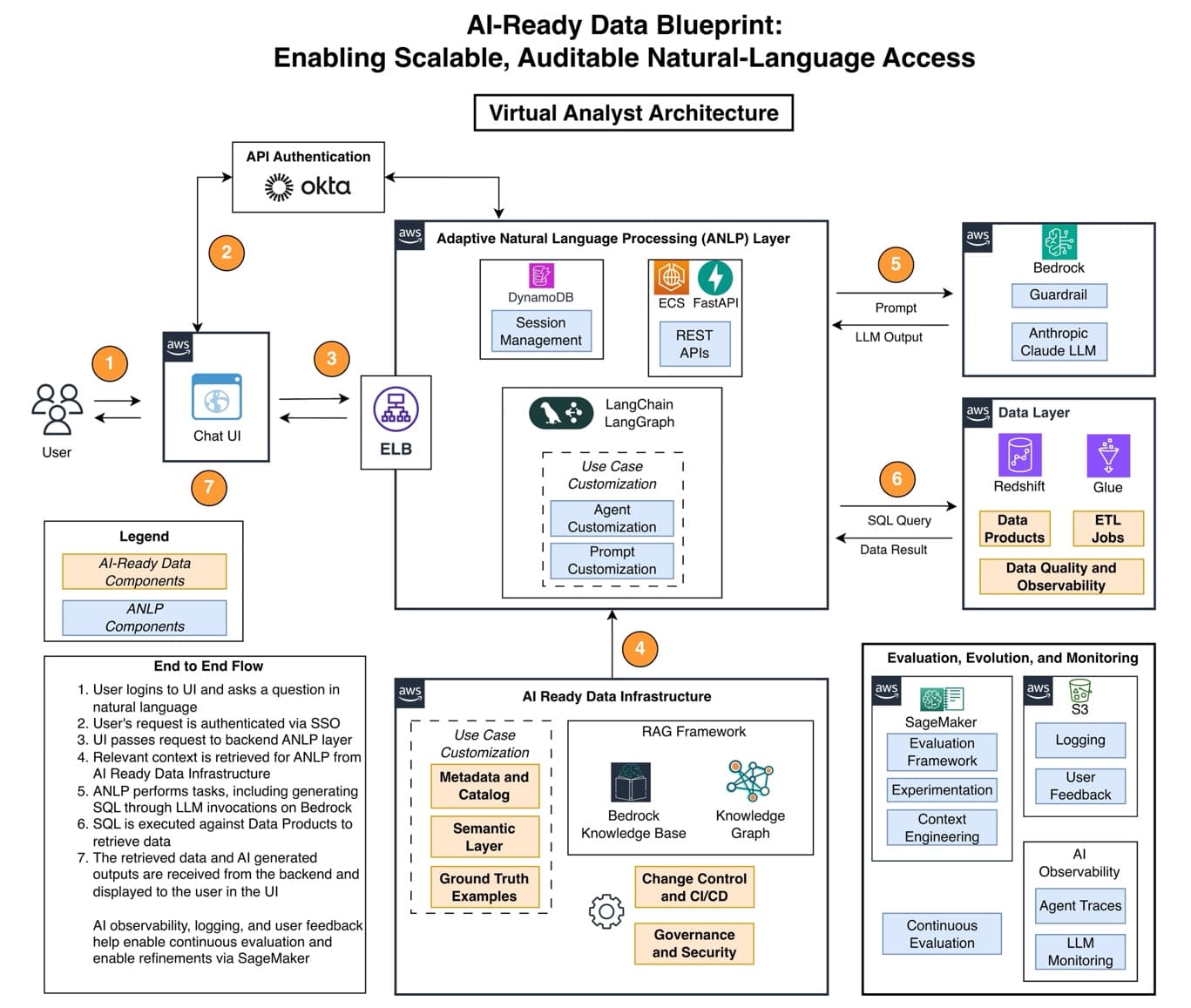
Vanguard built a conversational AI system called Virtual Analyst to help financial analysts query complex datasets without writing SQL or waiting days for data team support. The project revealed that effective conversational AI depends less on model selection and more on data infrastructure and cross-functional collaboration. Vanguard developed an AI-ready data blueprint by aligning data engineers, business analysts, compliance teams, and business users around shared semantic definitions, ownership models, and quality standards. The approach yielded measurable business outcomes and created processes that extended benefits beyond the initial use case.
TL;DR
- Vanguard's analysts faced friction accessing financial data, requiring SQL expertise and multi-day turnaround times from data teams
- The Virtual Analyst project shifted focus from AI model selection to data architecture, establishing what Vanguard calls AI-ready data infrastructure
- Success required breaking down silos between data engineers, business analysts, compliance officers, and business stakeholders to align on semantic definitions and quality standards
- The cross-functional operating model created lasting benefits beyond the conversational AI use case, establishing new processes and frameworks for data governance
Why It Matters
This case study demonstrates that deploying conversational AI at enterprise scale is fundamentally a data architecture problem, not primarily a foundation model problem. Organizations pursuing similar AI initiatives often underestimate the infrastructure and governance work required, focusing instead on model capabilities. Vanguard's experience shows that semantic clarity, metadata management, and cross-functional alignment are prerequisites for reliable AI-powered insights.
Business Impact
For operators and founders building AI products in regulated industries or complex data environments, this highlights that time-to-value depends on data readiness, not just AI sophistication. Vanguard's approach of establishing clear ownership models and quality standards upfront reduces downstream friction and enables faster iteration. The framework also demonstrates how AI initiatives can catalyze broader organizational improvements in data governance and cross-team collaboration.
Key Implications
- Enterprise AI deployment requires data infrastructure work that rivals or exceeds the effort spent on model selection and fine-tuning
- Cross-functional collaboration with clear ownership and semantic definitions is a prerequisite for reliable conversational AI, not a nice-to-have
- AI-ready data frameworks create spillover benefits for non-AI use cases, justifying investment in governance and metadata management
- Regulated industries face additional complexity requiring compliance teams in the design loop from the start, not as an afterthought
What to Watch
Monitor whether other financial services firms adopt similar AI-ready data frameworks and how quickly they move from pilot to production. Watch for emerging tools and standards that help organizations codify semantic definitions and ownership models at scale, as this remains a manual, labor-intensive process. Track whether Vanguard publishes more details on the specific AWS services used and the measurable business outcomes achieved, as these details would help other enterprises benchmark their own efforts.
Subscribe to the newsletter
The latest stories and analysis, delivered to your inbox.
Free. No spam. Unsubscribe any time.