vff — the signal in the noise
Research

Mapping Causal Reasoning in LLMs with Sparse Concept Graphs
Md Muntaqim Meherab, Noor Islam S. Mohammad, Faiza FerozRead original
Share
Mapping Causal Reasoning in LLMs with Sparse Concept Graphs

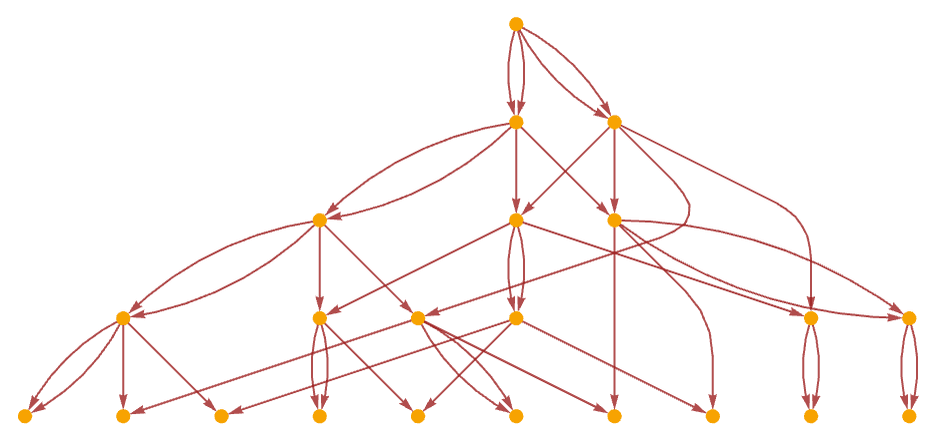
Researchers propose Causal Concept Graphs (CCG), a method that maps how concepts interact during multi-step reasoning in language models by combining sparse autoencoders with differentiable graph learning. The approach identifies sparse, interpretable latent features and learns directed causal dependencies between them, then validates these connections using a new Causal Fidelity Score metric. On three reasoning benchmarks with GPT-2 Medium, CCG significantly outperforms existing tracing and ranking methods, producing sparse, domain-specific graphs that remain stable across runs.

TL;DR

  • Causal Concept Graphs combine sparse autoencoders with DAGMA-style structure learning to map causal dependencies between concepts in LLM latent space
  • New Causal Fidelity Score metric measures whether graph-guided interventions produce larger downstream effects than random ones, validating graph quality
  • On ARC-Challenge, StrategyQA, and LogiQA benchmarks, CCG achieves CFS of 5.654, significantly outperforming ROME-style tracing (3.382) and SAE-only ranking (2.479)
  • Learned graphs are sparse (5-6% edge density), domain-specific, and stable across seeds, suggesting genuine causal structure rather than noise

Why it matters

Understanding how concepts causally interact during reasoning is fundamental to interpretability and control of language models. Current methods either localize individual concepts or trace information flow, but don't capture the causal structure of multi-step reasoning. This work bridges that gap with a principled approach that could enable more targeted interventions and safer model behavior.

Business relevance

For organizations deploying LLMs in high-stakes domains, interpretable causal reasoning maps could improve debugging, reduce hallucinations, and enable more precise fine-tuning. The ability to validate which concept interactions actually drive outputs has direct applications in model auditing, safety testing, and building more reliable AI systems.

Key implications

  • Sparse autoencoders alone are insufficient for understanding reasoning, and causal structure learning is necessary to capture how concepts interact during inference
  • Differentiable graph learning methods can recover meaningful causal dependencies in neural networks, opening new avenues for mechanistic interpretability research
  • Domain-specific graph structures suggest that reasoning patterns are learnable and stable, potentially enabling transfer of causal insights across related tasks

What to watch

Monitor whether CCG scales to larger models (GPT-3, GPT-4 scale) and whether learned causal graphs transfer across different tasks or model architectures. Also track whether this approach enables practical interventions that improve model robustness or reduce specific failure modes in real applications.

Share

vff Briefing

Weekly signal. No noise. Built for founders, operators, and AI-curious professionals.

No spam. Unsubscribe any time.

Related stories

Lightweight Model Beats GPT-4o at Robot Gesture Prediction
Research

Lightweight Model Beats GPT-4o at Robot Gesture Prediction

Researchers have developed a lightweight transformer model that generates co-speech gestures for robots by predicting both semantic gesture placement and intensity from text and emotion signals alone, without requiring audio input at inference time. The model outperforms GPT-4o on the BEAT2 dataset for both gesture classification and intensity regression tasks. The approach is computationally efficient enough for real-time deployment on embodied agents, addressing a gap in current robot systems that typically produce only rhythmic beat-like motions rather than semantically meaningful gestures.

3 days ago· ArXiv (cs.AI)
AWS Launches G7e GPU Instances for Cheaper Large Model Inference
TrendingModel Release

AWS Launches G7e GPU Instances for Cheaper Large Model Inference

AWS has launched G7e instances on Amazon SageMaker AI, powered by NVIDIA RTX PRO 6000 Blackwell GPUs with 96 GB of GDDR7 memory per GPU. The instances deliver up to 2.3x inference performance compared to previous-generation G6e instances and support configurations from 1 to 8 GPUs, enabling deployment of large language models up to 300B parameters on the largest 8-GPU node. This represents a significant upgrade in memory bandwidth, networking throughput, and model capacity for generative AI inference workloads.

6 days ago· AWS Machine Learning Blog
Anthropic Launches Claude Design for Non-Designers
Model Release

Anthropic Launches Claude Design for Non-Designers

Anthropic has launched Claude Design, a new product aimed at helping non-designers like founders and product managers create visuals quickly to communicate their ideas. The tool addresses a gap for early-stage teams and individuals who need to share concepts visually but lack design expertise or resources. Claude Design integrates with Anthropic's Claude AI platform, leveraging its capabilities to streamline the visual creation process. The launch reflects growing demand for AI-powered design tools that lower barriers to entry for non-technical users.

7 days ago· TechCrunch AI
Google Splits TPUs Into Training and Inference Chips

Google Splits TPUs Into Training and Inference Chips

Google is splitting its eighth-generation tensor processing units into separate chips optimized for AI training and inference, a shift the company says reflects the rise of AI agents and their distinct computational needs. The training chip delivers 2.8 times the performance of its predecessor at the same price, while the inference processor (TPU 8i) achieves 80% better performance and includes triple the SRAM of the prior generation. Both chips will launch later this year as Google continues its effort to compete with Nvidia in custom AI silicon, though the company is not directly benchmarking against Nvidia's offerings.

5 days ago· Direct