VFF - The signal in the noise

Qianer Liu

21 articles on VFF - The signal in the noise

Google Designs Custom Chip to Embed Gemini, Boost AI Efficiency
TrendingNews

Google Designs Custom Chip to Embed Gemini, Boost AI Efficiency

Google is developing a custom server chip called 'Frozen v2' that would embed its Gemini AI model architecture directly into hardware to improve inference efficiency. The chip is projected to be 6 to 10 times more efficient than Google's current homegrown AI chips when measured by tokens served per unit of power. The project addresses a critical compute capacity shortage that has strained Google Cloud's ability to serve external customers.

by Qianer Liu· The Information
Source
China's CXMT Seeks $8.6B in Record Domestic Tech IPO
TrendingNews

China's CXMT Seeks $8.6B in Record Domestic Tech IPO

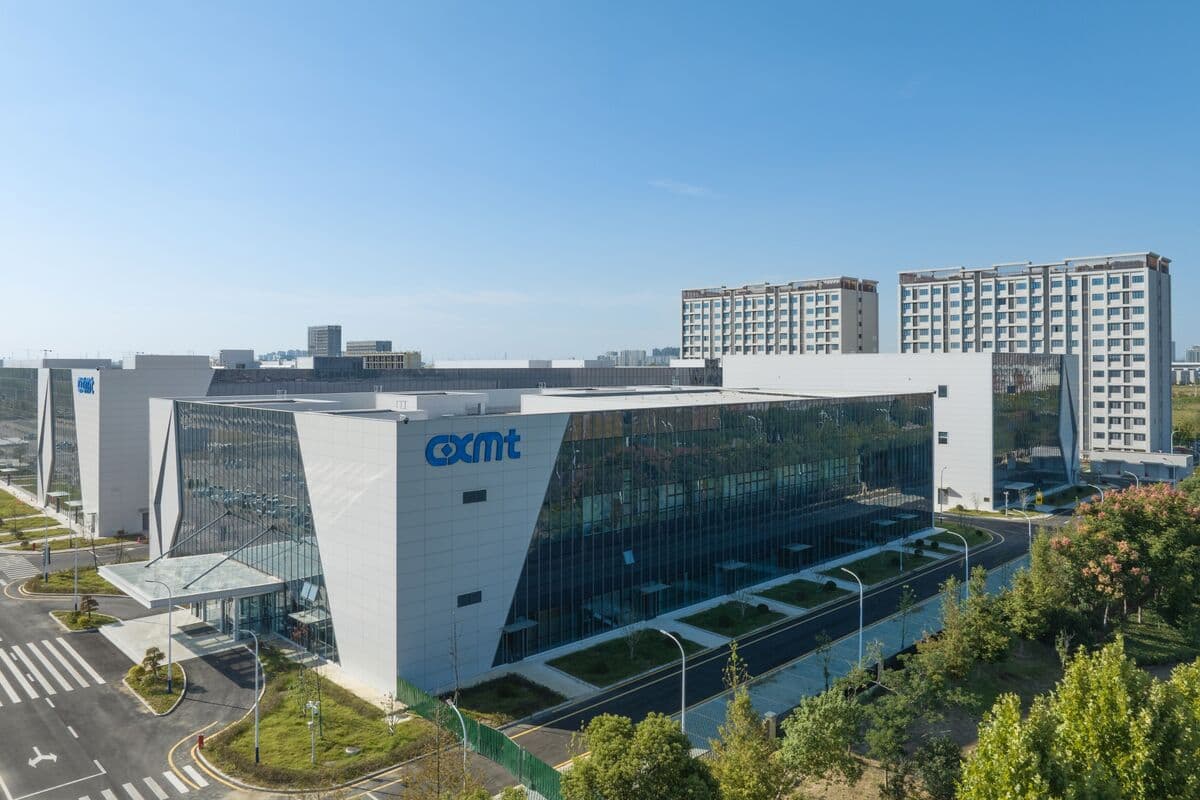
ChangXin Memory Technologies, China's leading memory-chip maker, filed for a Shanghai IPO seeking to raise at least 57.9 billion yuan ($8.6 billion), according to a regulatory filing on Wednesday. The offering is positioned to be the biggest tech listing in China's domestic market. The move reflects China's push to develop domestic semiconductor capabilities amid geopolitical tensions and supply chain concerns.

by Qianer Liu· The Information
Source
TSMC Plans $100B U.S. Expansion as AI Chip Demand Surges
TrendingNews

TSMC Plans $100B U.S. Expansion as AI Chip Demand Surges

Taiwan Semiconductor Manufacturing Company announced Thursday it will invest an additional $100 billion in the U.S., expanding its Arizona manufacturing footprint with at least four new chip plants. The move reflects surging demand for AI infrastructure and deepens TSMC's commitment to producing the world's most advanced semiconductors domestically. The expansion represents a significant escalation of TSMC's U.S. presence as competition for AI chip manufacturing capacity intensifies.

by Qianer Liu· The Information
Source
China to Allow Top AI Firms Limited Nvidia H200 Purchases
TrendingNews

China to Allow Top AI Firms Limited Nvidia H200 Purchases

China is preparing to allow its top AI companies to purchase limited quantities of Nvidia's H200 chips, marking a shift in Beijing's protectionist stance toward domestic chipmakers. The move comes after U.S. President Donald Trump authorized Nvidia to ship H200 chips to approved Chinese customers in December, reversing prior export restrictions. China's approval would help address acute chip shortages driven by surging AI demand while maintaining some constraints on foreign chip access.

by Qianer Liu· The Information
Source
Zhipu AI Explores Custom Chip as Export Controls Tighten
TrendingNews

Zhipu AI Explores Custom Chip as Export Controls Tighten

Zhipu AI, a leading Chinese AI lab behind the GLM series of open-source models, is exploring the design of a custom AI chip to address computing constraints driven by surging demand and U.S. export controls. The Beijing-based company has made preliminary inquiries with Chinese chip design houses but has not yet selected a partner. The move reflects broader pressure on Chinese AI developers to secure computing resources amid geopolitical restrictions.

by Qianer Liu· The Information
Source
Alibaba Bans Claude, Citing Security Concerns
TrendingNews

Alibaba Bans Claude, Citing Security Concerns

Alibaba Group has banned employees from using Anthropic's Claude and ordered them to remove all Claude models from work computers, citing security concerns about Anthropic. The directive was communicated to some employees on Friday. The ban affects Alibaba's workforce and signals growing tension around AI tool adoption in large enterprises.

by Qianer Liu· The Information
Source
Anthropic Pursues Custom AI Chip With Samsung
TrendingNews

Anthropic Pursues Custom AI Chip With Samsung

Anthropic is in early-stage talks with Samsung Electronics to manufacture a custom AI chip, according to sources with direct knowledge of the project. The move mirrors OpenAI's strategy of developing proprietary chips to reduce dependence on external computing infrastructure and control costs. Google, Amazon Web Services, Meta, and Microsoft have all developed their own chips, while OpenAI unveiled Jalapeno, an inference chip designed for large-language models, last month.

by Qianer Liu· The Information
Source
Baidu Chip Unit Ties IPO Participation to Chip Purchase Commitments
TrendingNews

Baidu Chip Unit Ties IPO Participation to Chip Purchase Commitments

Kunlunxin Technology, an AI chip firm majority owned by Baidu, is planning a Hong Kong IPO at a $50 billion target valuation. The company is conditioning investment participation on commitments from IPO investors to purchase its semiconductors, according to sources familiar with recent investor road shows.

by Qianer Liu· The Information
Source
DeepSeek Raises $7.4B with Control-Focused Deal Structure
TrendingNews

DeepSeek Raises $7.4B with Control-Focused Deal Structure

Chinese AI lab DeepSeek closed a funding round raising over $7.4 billion at a valuation exceeding $50 billion, making it one of the largest AI funding rounds. The deal uses an unusual structure where investors fund a limited partnership managed by CEO Liang Wenfeng rather than DeepSeek directly, a mechanism designed to preserve his absolute control. All investor shares carry a five-year lockup period, preventing early exits.

by Qianer Liu· The Information
Source
Nvidia Pitches Vera CPU to Chinese Data Center Market

Nvidia Pitches Vera CPU to Chinese Data Center Market

Nvidia is marketing its new Vera CPUs to Chinese customers for AI data centers, with availability targeted for August and orders opening now, according to Reuters sources. The move represents Nvidia's effort to expand its addressable market in China amid ongoing U.S. export restrictions on advanced AI chips. The timing and positioning suggest Nvidia is attempting to capture demand from Chinese data center operators before potential further regulatory constraints.

by Qianer Liu· The Information
Source
Google Taps Samsung for Next-Gen AI Chip as TSMC Capacity Tightens
TrendingNews

Google Taps Samsung for Next-Gen AI Chip as TSMC Capacity Tightens

Google is in talks with Samsung Electronics to manufacture part of its next-generation Tensor Processing Unit, code-named Icefish, using Samsung's 2-nanometer production technology. The move reflects broader industry pressure as AI chip demand strains manufacturing capacity at Taiwan Semiconductor Manufacturing Co., the dominant supplier. Icefish is planned as Google's 10th-generation TPU for use in cloud data centers.

by Qianer Liu· The Information
Source
Google, Nvidia Eye Intel as TSMC Backup

Google, Nvidia Eye Intel as TSMC Backup

TSMC's capacity constraints are prompting major AI chip designers, including Google and Nvidia, to explore Intel as a backup manufacturer for advanced processors. The shift reflects growing demand for AI chip production that outpaces TSMC's current manufacturing capacity. Intel stands to benefit from diversification of supply chains among leading AI companies.

by Qianer Liu· The Information
Source
Nvidia, SK Hynix Lock in Memory Supply for Next AI Platform
TrendingNews

Nvidia, SK Hynix Lock in Memory Supply for Next AI Platform

Nvidia and SK Hynix have signed a multiyear agreement to develop advanced memory chips together, addressing strain on global memory supply driven by AI demand. The deal covers chip design and manufacturing, with memory components intended for Nvidia's Vera Rubin platform, the company's next major AI system. The partnership reflects intensifying competition for specialized memory capacity as AI infrastructure scales.

by Qianer Liu· The Information
Source
SK Hynix to Double Capacity as AI Strains Memory Supply
TrendingNews

SK Hynix to Double Capacity as AI Strains Memory Supply

SK Hynix announced plans to double its memory chip capacity within five years to address persistent AI-driven demand strains on global supply. Chairman Chey Tae-won made the statement in Taipei, signaling that memory constraints will continue to challenge AI data center operations. The expansion targets one of the most significant hardware bottlenecks limiting AI infrastructure deployment.

by Qianer Liu· The Information
Source
Intel to Ship Crescent AI Chip This Year to Challenge Nvidia
TrendingNews

Intel to Ship Crescent AI Chip This Year to Challenge Nvidia

Intel plans to ship a new AI chip codenamed Crescent by year-end, according to Kevork Kechichian, who leads the company's data centre group. The processor is positioned as a cheaper, simpler alternative to Nvidia's dominant offerings. Intel is betting this approach can carve out market share in the AI chip space where Nvidia currently holds substantial control.

by Qianer Liu· The Information
Source
U.S. Closes AI Chip Export Loophole for Chinese Companies

U.S. Closes AI Chip Export Loophole for Chinese Companies

The U.S. Commerce Department issued guidance clarifying that Chinese companies must obtain licenses to purchase advanced U.S. AI chips, even when attempting to circumvent restrictions through overseas subsidiaries. The move closes a potential regulatory loophole that allowed Chinese firms to source powerful AI chips indirectly. This represents a tightening of existing export controls on advanced semiconductor technology.

by Qianer Liu· The Information
Source
ByteDance Develops Groq-Style AI Chip with Chinese Partner
TrendingNews

ByteDance Develops Groq-Style AI Chip with Chinese Partner

ByteDance is developing a new AI chip designed to run language models at low cost, modeled after Groq's architecture. The Chinese tech giant is collaborating with InnoStar Semiconductor to integrate the startup's memory technology into the chip. This move represents ByteDance's effort to build independent AI infrastructure amid U.S. export restrictions on advanced semiconductors.

by Qianer Liu· The Information
Source
Huawei Pursues New Chip Strategy to Counter U.S. Sanctions
TrendingNews

Huawei Pursues New Chip Strategy to Counter U.S. Sanctions

Huawei announced Monday that it is pursuing a new semiconductor development approach to close the gap with leading chipmakers despite U.S. export controls limiting China's access to advanced manufacturing equipment. Board director He Tingbo outlined the strategy without providing specific technical details. The move reflects Huawei's effort to maintain competitive chip capabilities under sustained sanctions pressure.

by Qianer Liu· The Information
Source
Anthropic Eyes Microsoft AI Chips to Expand Capacity

Anthropic Eyes Microsoft AI Chips to Expand Capacity

Anthropic is negotiating with Microsoft to rent servers equipped with Microsoft-designed AI chips to expand its computing capacity. The deal would represent a significant win for Microsoft's chip division, which faced delays in its effort to compete with Nvidia's dominant position in AI infrastructure. Microsoft aims to replicate the in-house chip strategies of Google and Amazon to reduce reliance on Nvidia for its cloud customers.

by Qianer Liu· The Information
Source
Google Taps Marvell for Custom Inference Chips

Google Taps Marvell for Custom Inference Chips

Google is negotiating with Marvell Technology to develop two specialized AI chips: a memory processing unit to complement Google's tensor processing units, and a new TPU optimized for inference workloads. The effort reflects intensifying competition in inference chips, a critical bottleneck as companies deploy AI models in production systems like autonomous agents. Nvidia has similarly prioritized inference efficiency, recently releasing a language processing unit based on licensed Groq technology.

by Qianer Liu· The Information
Source
TSMC Raises 2026 Revenue Forecast on Persistent AI Chip Demand

TSMC Raises 2026 Revenue Forecast on Persistent AI Chip Demand

TSMC raised its 2026 revenue growth forecast to more than 30 percent, up from its January projection, citing sustained surge in AI chip demand that continues to outpace supply. The world's leading advanced chip manufacturer, which produces the majority of cutting-edge semiconductors, is benefiting from persistent customer demand for AI accelerators and processors. The upgrade signals confidence in sustained AI infrastructure spending despite earlier concerns about market saturation.

by Qianer Liu· The Information
Source