VFF - The signal in the noise
NewsTrending

Google Launches First Data Center Satellite With Operational AI Model

Read original
Share
Google Launches First Data Center Satellite With Operational AI Model

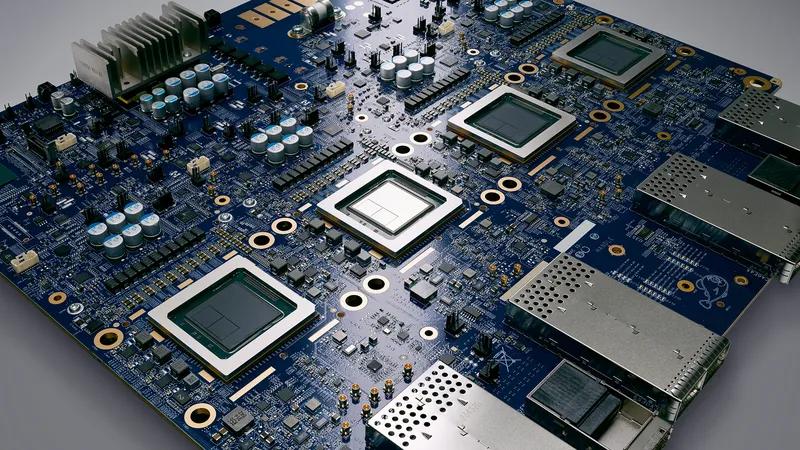
Google has launched its first data center satellite into orbit, equipped with a TPU (Tensor Processing Unit) running a Gemma 4 model from Google DeepMind. The satellite is currently operational and generating poetry as a proof of concept. This marks Google's initial step in deploying AI compute infrastructure beyond Earth.

  • Google's first data center satellite is now online with a TPU running Gemma 4
  • The satellite is demonstrating capability by generating poetry
  • This represents Google's entry into space-based AI infrastructure
  • The deployment signals potential for distributed compute beyond terrestrial data centers

Space-based compute infrastructure could reshape how companies deploy AI workloads, potentially reducing latency for certain applications and distributing processing load geographically. This move by Google, a major AI player, suggests the technology is moving from theoretical to operational, which may prompt competitive responses from other cloud providers.

Satellite-based data centers could offer new revenue streams for cloud providers and reduce dependency on ground-based infrastructure. However, the practical business case remains unproven, as the current deployment is limited to a poetry-generation proof of concept rather than production workloads.

  • Google is exploring non-terrestrial infrastructure for AI compute, potentially opening a new frontier for cloud services
  • TPU deployment in space demonstrates hardware reliability in orbital conditions
  • Competitors may face pressure to develop similar capabilities or risk falling behind in infrastructure innovation

Monitor whether Google expands this satellite program with additional launches, increases computational capacity, or begins testing production workloads. Watch for announcements from AWS, Microsoft Azure, and other cloud providers regarding their own space-based infrastructure plans. Track regulatory developments around satellite-based data centers and spectrum allocation.

OneUpAI
OneUp Your Business. Get More Done. OneUp Your Business. Get More Done. OneUp Your Business. Get More Done.
Learn More
Share

Subscribe to the newsletter

The latest stories and analysis, delivered to your inbox.

Free. No spam. Unsubscribe any time.

Related stories

Google DeepMind Advances Robot Dexterity with Gemini 2.5
TrendingModel Release

Google DeepMind Advances Robot Dexterity with Gemini 2.5

Google DeepMind has released Gemini Robotics 2.5, an updated vision-language-action model designed to improve robot dexterity, reliability, and safety in physical tasks. The model represents an advancement in enabling robots to perform complex real-world manipulation with greater precision and dependability. The release signals continued progress in translating large language models into embodied AI systems capable of autonomous physical work.

· Google Deepmind
Mosaic Raises $47M for AI-Guided Surgical Catheters
TrendingNews

Mosaic Raises $47M for AI-Guided Surgical Catheters

Mosaic Intelligence Labs, a one-year-old surgical robotics startup, has raised $47 million in seed funding led by 8VC and Fundomo to develop semi-autonomous catheters that can navigate blood vessels during surgery. The company represents a new wave of AI-powered robotics firms challenging Intuitive Surgical's dominance in the surgical automation space, which has been led by the da Vinci Surgical System for over 25 years. Mosaic's technology aims to further automate surgery by combining AI advances with human surgeon control, allowing catheter tips to bend and find their own path through the vascular system.

by Rocket Drew· The Information
Google Launches Faster, More Secure TPU Chips to Challenge Nvidia
TrendingNews

Google Launches Faster, More Secure TPU Chips to Challenge Nvidia

Google announced two new tensor processing units, the TPU 8tx and TPU 8i Max, designed to handle heavier AI workloads with improved security compared to previous generations. The chips represent an expansion of Google's growing chip business and pose a competitive challenge to Nvidia's dominance in the AI hardware market. The announcement underscores a broader industry shift toward custom silicon for AI applications.

by Ryan Barwick· The Information
NVIDIA and Korea Deepen Sovereign AI Partnership
TrendingNews

NVIDIA and Korea Deepen Sovereign AI Partnership

NVIDIA and South Korea's Ministry of Science and ICT are expanding collaboration across the country's sovereign AI ecosystem, covering semiconductors, data center infrastructure, talent development, and security. The partnership includes training programs, hackathons, and technical seminars to strengthen GPU utilization, plus work with Korean foundation model builders using NVIDIA Dynamo software. NVIDIA also announced a separate collaboration with SK Telecom and Rebellions to advance sovereign AI infrastructure using NVIDIA NVLink Fusion technology.

by Jesse Clayton· NVIDIA Blog (AI)