Alibaba Open-Sources Qwen3.8 Trillion-Parameter Model
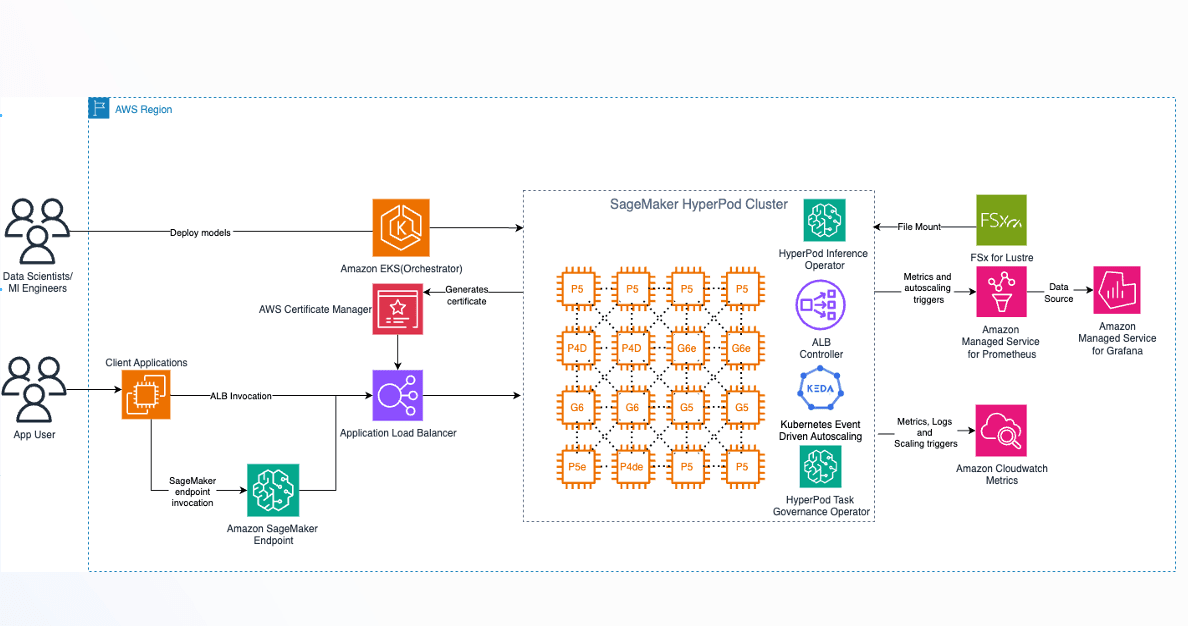
Alibaba released Qwen3.8-2.4T-A95B as open weights on August 12, 2026, marking the first time a Qwen-Max-class model became publicly available. The 2.4 trillion parameter model uses a hybrid linear-plus-full-attention architecture with 95 billion activated parameters per token and supports up to 262K native context tokens, extensible to 1M. AWS published a deployment guide showing how to run the model on SageMaker HyperPod using vLLM on ml.p6-b300 instances with NVIDIA B300 Blackwell Ultra GPUs.
TL;DR
- Alibaba's Qwen3.8-2.4T-A95B is the first open-weight release of a Qwen-Max-class model, with 2.4T total parameters and 95B activated per token
- The model uses fine-grained Mixture of Experts (512 routed experts plus 1 shared) with a 3:1 ratio of linear attention (Gated DeltaNet) to full attention (Gated Attention) layers for efficient long-context inference
- Native context window is 262K tokens, extensible to 1M, with max output length of 128K tokens and native Multi-Token Prediction for speculative decoding
- AWS published deployment guidance for running the model on SageMaker HyperPod using vLLM with NVFP4 quantization on ml.p6-b300 instances with 8 NVIDIA B300 Blackwell Ultra GPUs
Why It Matters
Open-weight models eliminate per-token API costs and give organizations full control over data, inference behavior, and customization. Qwen3.8's hybrid attention architecture and fine-grained MoE design enable efficient inference at scale, making trillion-parameter models operationally feasible for demanding agentic and reasoning workloads like multi-step coding and autonomous tool use. The AWS deployment guide removes technical barriers to production deployment.
Business Impact
Organizations can now self-host a frontier-class model without vendor lock-in or per-token fees, reducing long-term inference costs at scale. The hybrid architecture and native speculative decoding improve throughput and latency, making complex reasoning tasks more economically viable. Deployment guidance from AWS lowers the engineering effort required to operationalize trillion-parameter models.
Key Implications
- Open-weight frontier models shift economics away from API-based inference toward self-hosted infrastructure, favoring organizations with GPU capacity and operational expertise
- The hybrid attention design (linear plus full attention) becomes a standard pattern for efficient long-context inference, reducing memory and compute requirements as context windows scale toward 1M tokens
- Native Multi-Token Prediction enables speculative decoding without separate draft models, improving inference efficiency for agentic workloads that require multiple reasoning steps
What to Watch
Monitor adoption rates of Qwen3.8 on SageMaker HyperPod and other cloud platforms to gauge demand for self-hosted trillion-parameter models. Track whether other model providers adopt similar hybrid attention architectures and fine-grained MoE designs for long-context efficiency. Observe whether native MTP becomes standard in new model releases as a cost-reduction mechanism for inference.
Subscribe to the newsletter
The latest stories and analysis, delivered to your inbox.
Free. No spam. Unsubscribe any time.


