AWS Adds Automated Quality Gates for AI Agents in CI/CD
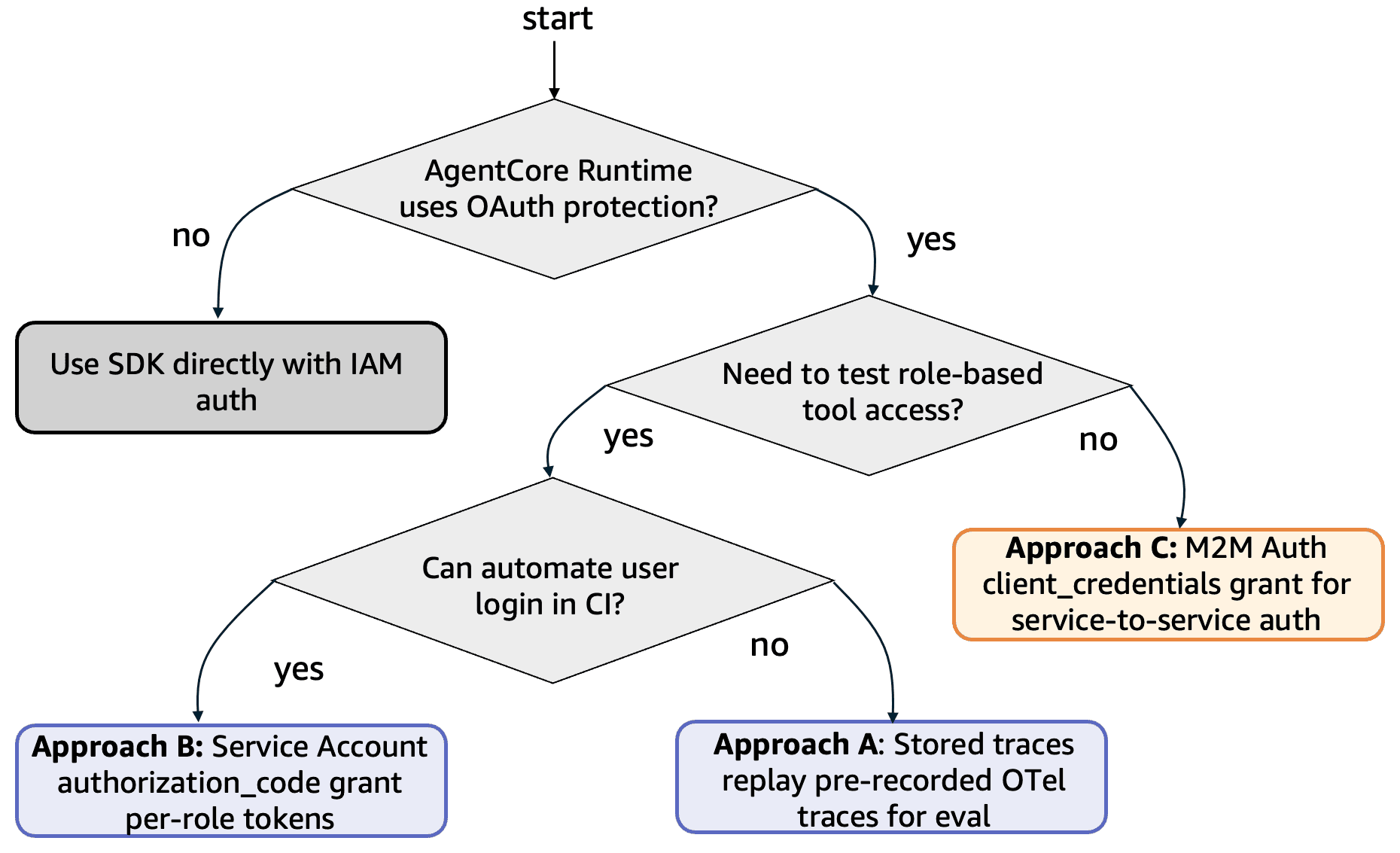
AWS has published a technical guide for building a CI/CD quality gate that automatically evaluates AI agents deployed on Amazon Bedrock AgentCore runtime and blocks pull requests when performance regresses. The post covers a complete reference implementation including agent deployment, MCP server integration with OAuth protection, role-based access control, and automated evaluation using the AgentCore Evaluate API. The approach uses GitHub Actions to run on-demand evaluations with built-in LLM-based scorers that assess agent behavior across dimensions like helpfulness and tool selection accuracy.
TL;DR
- AWS published a technical guide for automating agent evaluation in CI/CD pipelines using Amazon Bedrock AgentCore and GitHub Actions
- The implementation includes deploying agents with MCP servers protected by OAuth and role-based access control
- GitHub Actions pipelines can invoke OAuth-protected runtimes using machine-to-machine client credentials flow for CI authentication
- Quality gates block PR merges when AgentCore Evaluate API scores drop, preventing performance regressions from reaching production
Why It Matters
As AI agents move into production, teams need automated quality assurance to catch performance degradation before deployment. This guide addresses a concrete gap: how to evaluate agent behavior in CI without manual testing, and how to authenticate CI pipelines to OAuth-protected services. The approach uses LLM-based evaluation of OpenTelemetry traces, which provides a scalable alternative to manual QA.
Business Impact
Organizations deploying AI agents face risk if code changes degrade agent quality without detection. Automated evaluation gates reduce the cost of manual testing and lower the risk of shipping broken agents to production. The reference implementation reduces engineering effort by providing a complete, tested pattern rather than requiring teams to build evaluation infrastructure from scratch.
Key Implications
- Teams can now enforce quality standards for AI agents in the same way they do for traditional software, using automated testing as a merge blocker
- The machine-to-machine OAuth pattern shown here applies beyond agents to any CI/CD scenario requiring programmatic access to OAuth-protected AWS services
- LLM-based evaluation of agent traces becomes a standard practice, shifting quality assurance from manual testing to automated scoring on dimensions like correctness and tool selection
What to Watch
Monitor adoption of this pattern across AWS customers to understand how teams are operationalizing agent evaluation. Watch for extensions to this approach, such as cost-based evaluation (penalizing expensive tool calls) or multi-turn conversation evaluation. Track whether other cloud providers or agent frameworks publish similar CI/CD evaluation patterns.
Subscribe to the newsletter
The latest stories and analysis, delivered to your inbox.
Free. No spam. Unsubscribe any time.


