AWS Shows How to Build AI Phone Ordering for Restaurants
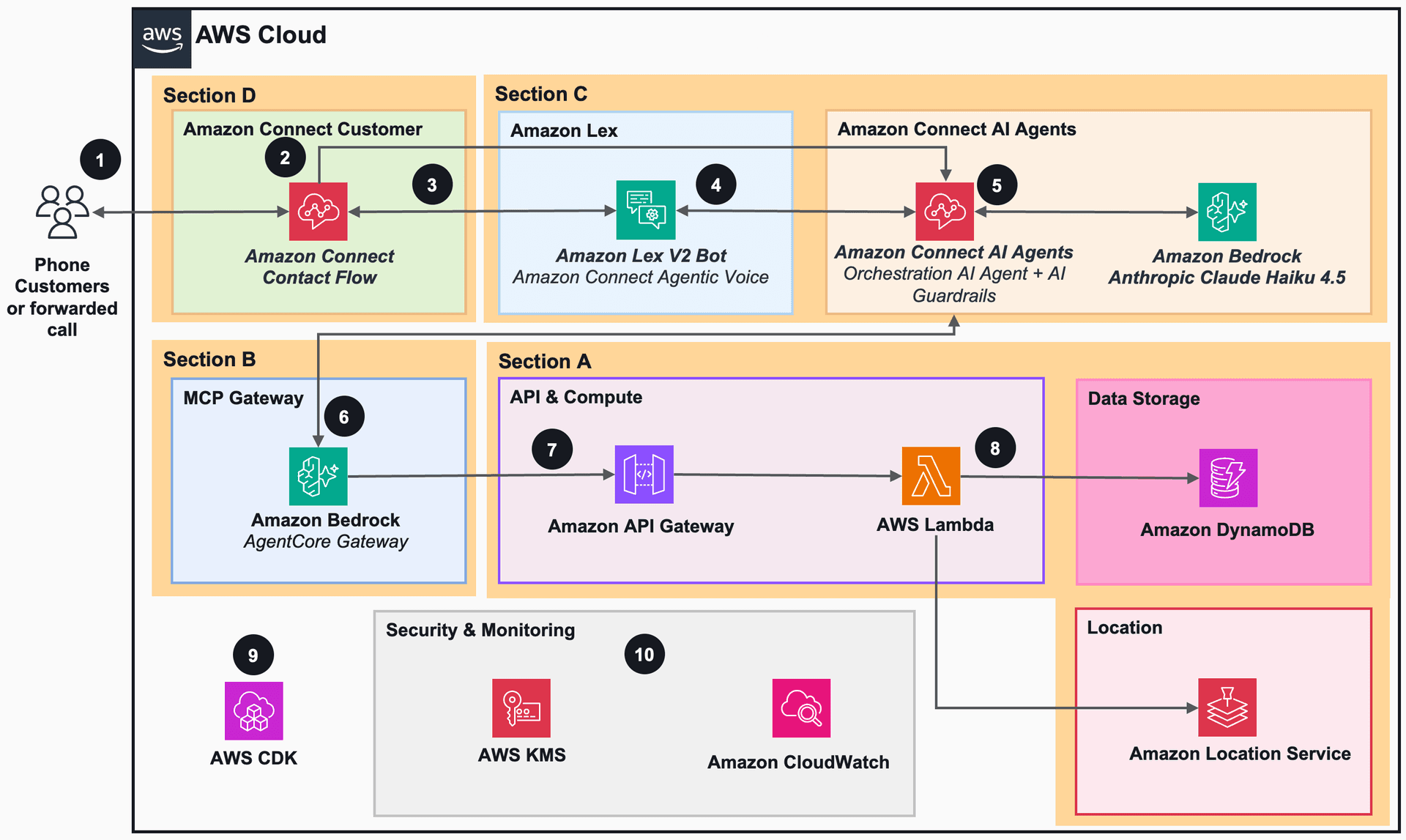
AWS published a technical walkthrough for building a voice-based restaurant ordering system using Amazon Connect, Lex V2, and AI agents. The system answers inbound calls, takes orders through natural conversation, and confirms them without requiring apps, websites, or customer logins. The architecture separates the telephony channel, conversation logic, and backend services to keep ordering functionality independent from how customers access it.
TL;DR
- AWS demonstrates a phone-based AI ordering system for restaurants using Amazon Connect, Lex V2, and Connect AI agents
- The system handles speech recognition and synthesis natively through Amazon Connect Agentic Voice, eliminating need for separate speech services
- Backend services connect to the agent through Model Context Protocol (MCP) and Amazon Bedrock AgentCore, allowing menu and location data to remain independent from the conversation layer
- The solution identifies callers by phone number rather than login and keeps agent logic separate from the telephony channel
Why It Matters
Phone ordering remains a significant channel for restaurant orders, but ties up staff during busy periods. This technical approach shows how AI can handle the full ordering workflow through voice alone, reducing manual work and freeing staff to focus on in-person customers. The modular architecture demonstrates a pattern for building channel-agnostic AI agents that can work across phone, chat, or other interfaces.
Business Impact
Restaurants lose revenue when callers encounter long hold times or busy signals. An AI host that handles phone orders 24/7 without staff intervention reduces friction for phone-preferring customers and eliminates the cost of dedicated order-taking staff during peak hours. The architecture allows restaurants to reuse the same ordering logic across multiple channels without rebuilding the agent for each one.
Key Implications
- Voice AI for transactional workflows is moving from experimental to deployable, with AWS providing production-ready components rather than requiring custom speech and NLU pipelines
- The use of Model Context Protocol as a bridge between agents and backends suggests a shift toward standardized tool discovery, reducing vendor lock-in and allowing backend systems to evolve independently
- Phone-based ordering systems that require no app or login lower the barrier for older customers and those without smartphones, potentially capturing a customer segment that online ordering misses
What to Watch
Monitor whether restaurants adopt this pattern at scale and what call completion rates and order accuracy look like in production. Watch for similar implementations across other phone-heavy industries like healthcare scheduling, customer service, and delivery. Track whether the Model Context Protocol becomes a standard for agent-to-backend integration or remains AWS-specific.
Subscribe to the newsletter
The latest stories and analysis, delivered to your inbox.
Free. No spam. Unsubscribe any time.