VFF - The signal in the noise
News

Alibaba's Qwen3.8-Max Challenges US AI Leadership

Read original
Share
Alibaba's Qwen3.8-Max Challenges US AI Leadership

Alibaba released Qwen3.8-Max, claiming it is its most capable AI model to date with performance comparable to Anthropic's Claude and OpenAI's systems. The company made the model widely available following a preview last month when it claimed the system was second only to Anthropic's Fable 5. The release intensifies competition in the global AI market and reflects China's continued push to develop frontier-class language models.

  • Alibaba released Qwen3.8-Max, described as its largest and most capable AI model
  • Company claims performance rivals Anthropic, OpenAI, and domestic competitor Moonshot AI's Kimi K3
  • Model was previewed last month with claims of being second only to Anthropic's Fable 5
  • Release adds to tensions in Silicon Valley and Washington over AI competition

The release signals that Chinese AI labs continue closing the gap with US frontier models in raw capability. This escalates geopolitical competition over AI leadership and raises questions about the effectiveness of US export controls and technology restrictions intended to maintain American AI dominance.

For enterprises evaluating AI vendors, Alibaba's competitive positioning in large language models expands options and may pressure pricing and feature parity across US and Chinese providers. Companies with operations in China or serving Chinese markets now have credible domestic alternatives to US-based AI platforms.

  • Chinese AI development is advancing faster than some Western assessments suggested, narrowing the performance gap with US frontier labs
  • Widespread availability of capable Chinese models may complicate US policy efforts to restrict advanced AI technology transfer
  • Competition from Alibaba and other Chinese providers could accelerate feature development and reduce costs across the global AI market

Monitor whether Qwen3.8-Max gains significant adoption among developers and enterprises, and track how US policymakers respond to continued releases of capable Chinese models. Watch for any technical benchmarking studies comparing Qwen3.8-Max directly to Claude and OpenAI systems to verify Alibaba's performance claims.

Share

Subscribe to the newsletter

The latest stories and analysis, delivered to your inbox.

Free. No spam. Unsubscribe any time.

Related stories

Moonshot AI Releases Kimi K3, First Open 3T-Parameter Model
TrendingModel Release

Moonshot AI Releases Kimi K3, First Open 3T-Parameter Model

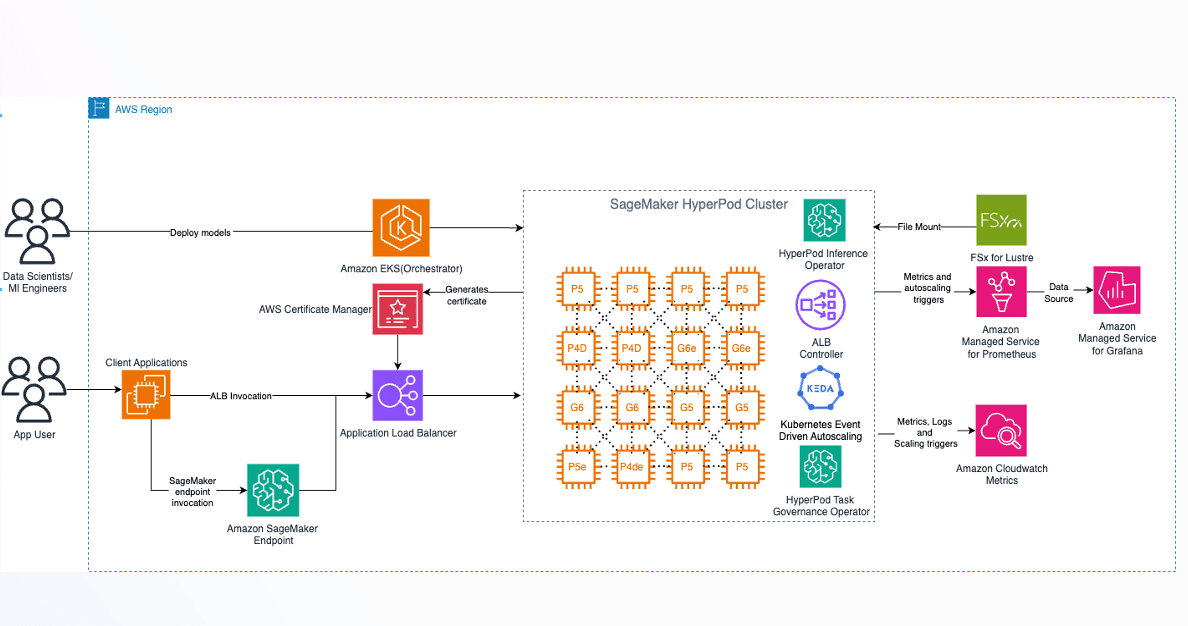
Moonshot AI released Kimi K3 on July 27, 2026, a 2.8 trillion parameter open-weight model that is the first in its class to reach 3 trillion parameters. The model uses a Mixture of Experts architecture with 896 experts, activating only 16 per token for 104 billion active parameters per forward pass. AWS published a deployment guide covering two approaches: Amazon SageMaker HyperPod and Amazon EKS, enabling organizations to self-host the model on their own infrastructure.

by Vivek Gangasani· AWS Machine Learning Blog
OpenAI cuts Luna prices 80% as AI competition shifts to cost
TrendingNews

OpenAI cuts Luna prices 80% as AI competition shifts to cost

OpenAI has cut prices on two models in its GPT-5.6 series: Luna by 80% to $1.40 per million tokens combined, and Terra by 20% to $14 per million tokens combined, while introducing a premium Fast mode for its flagship Sol model at double the standard price. The moves come days after Anthropic released Claude Opus 5 at competitive pricing and Google launched lower-cost Gemini models, signaling a shift in AI competition toward cost and speed rather than capability alone. Luna now competes directly with the market's low-cost inference tier, though it remains more expensive than some alternatives like DeepSeek's flash model.

by carl.franzen@venturebeat.com (Carl Franzen)· VentureBeat AI
Fundamental LLM flaw makes security impossible, researchers argue
Research

Fundamental LLM flaw makes security impossible, researchers argue

Researchers presented a paper at the International Conference on Machine Learning arguing that large language models contain a fundamental flaw that makes them impossible to fully secure against attacks. By exploiting how LLMs track instruction sources, researchers tricked models from OpenAI, Anthropic, Alibaba, and DeepSeek into generating prohibited content like drug synthesis instructions. The vulnerability, called chain-of-thought forgery, exposes a core architectural problem that current red-teaming and guardrail approaches cannot solve.

by Will Douglas Heaven· MIT Technology Review
Moonshot AI Opens Kimi K3 Weights, But With Commercial Strings
TrendingNews

Moonshot AI Opens Kimi K3 Weights, But With Commercial Strings

Moonshot AI released full model weights for Kimi K3, a 2.8 trillion-parameter open model with a one million-token context window and frontier benchmark performance. The release includes infrastructure for self-hosting, but comes with a custom license that imposes restrictions on larger companies and AI service providers not found in traditional open-source licenses. Enterprises with over 20 million dollars in annual revenue operating a Model as a Service business must negotiate a separate agreement with Moonshot AI before commercial deployment.

by carl.franzen@venturebeat.com (Carl Franzen)· VentureBeat AI