VFF - The signal in the noise
NewsTrending

Alibaba Launches Qwen3.8 Max, Escalating AI Competition
Read original
Share
Alibaba Launches Qwen3.8 Max, Escalating AI Competition

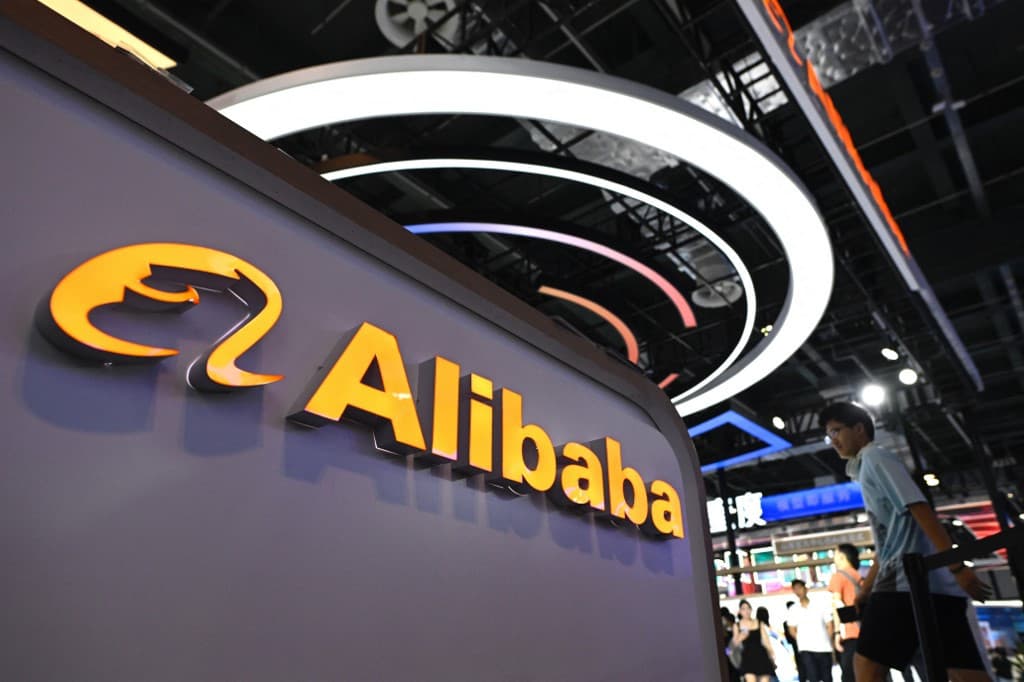
Alibaba Group has unveiled a preview version of Qwen3.8 Max, its largest model to date with 2.4 trillion parameters, claiming performance comparable to top U.S. AI models. The announcement signals continued competition between Chinese and American tech firms in large language model development. The move reflects broader efforts by Chinese AI companies to challenge Silicon Valley's dominance in generative AI.

  • Alibaba unveiled Qwen3.8 Max, its largest model with 2.4 trillion parameters
  • Company claims performance is comparable to leading U.S. models
  • Release is a preview version, not yet full deployment
  • Reflects intensifying competition between Chinese and American AI firms

The release underscores the accelerating AI capability race between Chinese and U.S. technology companies. As Chinese firms like Alibaba advance their model capabilities, they are narrowing the perceived gap with established U.S. leaders, reshaping the competitive landscape for generative AI development and deployment globally.

For enterprises evaluating AI infrastructure and model providers, Alibaba's competitive positioning affects vendor selection, pricing dynamics, and technology roadmap decisions. Companies operating in or serving both U.S. and Chinese markets must now assess multiple credible large language model options rather than defaulting to U.S.-based alternatives.

  • Chinese AI firms are achieving technical parity with U.S. counterparts on model scale and claimed performance metrics
  • The competitive pressure may accelerate innovation cycles and capability improvements across the industry
  • Geopolitical and regulatory considerations around AI model sourcing and data residency become more complex for multinational enterprises

Monitor whether Qwen3.8 Max's full release demonstrates the claimed performance parity in independent benchmarks and real-world applications. Track adoption rates among enterprises and developers, particularly outside China, to assess whether Chinese models gain meaningful market share. Watch for responses from U.S. AI leaders and any regulatory actions related to technology competition and data governance.

OneUpAI
OneUp Your Business. Get More Done. OneUp Your Business. Get More Done. OneUp Your Business. Get More Done.
Learn More
Share

Subscribe to the newsletter

The latest stories and analysis, delivered to your inbox.

Free. No spam. Unsubscribe any time.

Related stories

OpenAI's Astra model alarms safety experts with new reasoning technique
News

OpenAI's Astra model alarms safety experts with new reasoning technique

OpenAI's new Astra model employs a technique called 'recurrent depth' that enables reasoning outside the sequential thinking pattern used by most current reasoning models. AI safety experts have raised concerns about this approach. The technique represents a departure from established reasoning architectures in large language models.

by Russell Brandom· TechCrunch AI
Anthropic cuts agent costs 75%, adds enterprise safeguards
TrendingModel Release

Anthropic cuts agent costs 75%, adds enterprise safeguards

Anthropic released Claude Fable 5.1 and Mythos 5.1, its latest large language models, alongside a 75% cost reduction for cached context reads and a new Enterprise Frontier Safeguards security architecture. The release targets enterprise deployment of persistent agents capable of multi-hour problem-solving tasks. Fable 5.1 shows significant benchmark improvements across scientific research, coding, and business workflow tasks, though results are vendor-reported rather than independently verified.

by carl.franzen@venturebeat.com (Carl Franzen)· VentureBeat AI
Chinese AI Model Undercuts US Rivals by 7x on Cost
News

Chinese AI Model Undercuts US Rivals by 7x on Cost

Zhipu's GLM-5.3-Flash model launched on OpenRouter at 7.5 to 25 cents per million tokens (promotional pricing), delivered entirely on Chinese infrastructure. The model scores 57 on Artificial Analysis' intelligence index at roughly nine cents per task, compared to GPT-5.6 Sol at 59 cents and Grok 4.6 at 94 cents, creating significant cost pressure on enterprise AI budgets already strained by unexpected consumption.

· VentureBeat AI
Robot Builders Move Beyond GPT-2 Era AI
TrendingNews

Robot Builders Move Beyond GPT-2 Era AI

Robot developers are moving beyond GPT-2-era language models to build more capable AI systems for robotic control and reasoning. The article signals a maturation in the field where physical robot platforms are now constrained by the limitations of older, smaller language models rather than hardware. This shift reflects growing demand for more sophisticated AI brains that can handle complex robotic tasks beyond what earlier-generation models can support.

by Tim Fernholz· TechCrunch AI