VFF - The signal in the noise
NewsTrending

Meta Doubles Louisiana Data Center to 5 Gigawatts
Read original
Share
Meta Doubles Louisiana Data Center to 5 Gigawatts

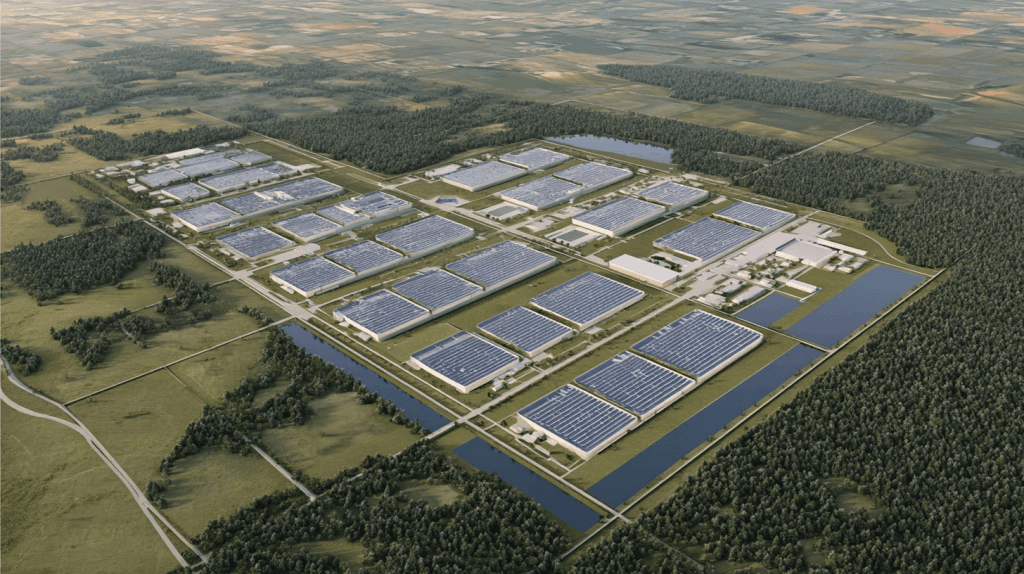
Meta announced Monday it will invest an additional $40 billion to more than double the planned computing capacity of its Louisiana data center to five gigawatts from two gigawatts originally announced in 2024. The expansion makes the facility Meta's largest computing infrastructure to date. The move reflects Meta's escalating capital commitments to AI infrastructure as competition intensifies in the sector.

  • Meta investing additional $40 billion in Louisiana data center expansion
  • Computing capacity more than doubling from 2 gigawatts to 5 gigawatts
  • Original 2 gigawatt capacity was announced in 2024
  • Louisiana facility is now Meta's largest computing facility

The expansion signals Meta's aggressive pivot toward AI infrastructure investment and its confidence in sustained demand for computing power. This scale of capital deployment reflects the competitive pressure among major tech platforms to secure computational resources for AI model training and deployment.

For enterprises and service providers, Meta's infrastructure buildout has implications for cloud computing capacity, energy markets, and the competitive dynamics of AI services. The $40 billion commitment demonstrates the capital intensity required to compete in AI infrastructure, potentially raising barriers to entry for smaller players.

  • Meta is doubling down on AI infrastructure as a core business priority, committing substantial capital beyond original plans
  • Louisiana becomes a critical hub for Meta's AI operations and computational capacity
  • The expansion may have significant implications for regional energy demand and supply chain considerations

Monitor whether other major tech platforms announce comparable infrastructure expansions and how regional energy markets respond to the increased demand. Track Meta's timeline for bringing the expanded capacity online and any updates on the specific AI workloads and applications this capacity will support.

Share

Subscribe to the newsletter

The latest stories and analysis, delivered to your inbox.

Free. No spam. Unsubscribe any time.

Related stories

Meta's Muse Image Uses Public Instagram Photos Without Consent
TrendingNews

Meta's Muse Image Uses Public Instagram Photos Without Consent

Meta's Muse Image tool allows users to generate AI images by tagging public Instagram accounts, effectively using those accounts' photos as training material without explicit consent. Any Instagram user with a public profile can have their images incorporated into AI-generated creations by other users. The feature raises questions about image rights, consent, and Meta's approach to AI training data sourcing.

by Lauren Forristal· TechCrunch AI
Meta's custom AI chips enter production in September
TrendingNews

Meta's custom AI chips enter production in September

Meta will begin production of its new custom AI chips in September 2026. The company is adopting a modular design approach to accommodate rapid changes in AI technology and evolving computational needs. This move reflects Meta's strategy to reduce dependence on third-party chip suppliers and control its AI infrastructure costs.

by Ram Iyer· TechCrunch AI
Meta Opens Coding AI Model to Developers
TrendingNews

Meta Opens Coding AI Model to Developers

Meta has released Muse Spark 1.1, an upgraded AI coding model available through a new Meta Model API for developers. The company positions the model as a competitive offering with improvements in bug detection and fixing, support for multi-agent workflows, and multimodal capabilities across images, videos, and documents. This follows Meta's April launch of its first in-house Muse Spark model as it re-enters the AI race.

by Dominic Preston· The Verge AI
Meta Launches Muse Image AI Model Across Social Platforms
TrendingNews

Meta Launches Muse Image AI Model Across Social Platforms

Meta has launched Muse Image, an AI image generation model developed by its Superintelligence Labs division, now powering image tools across Meta AI, Instagram, and WhatsApp, with rollout planned for Facebook and Messenger. The model is described as 'agentic,' working with Muse Spark to reason through prompts, search the web, and plan before generating images. Muse Image replaces Meta's Llama lineup as part of a broader shift to the Muse family of AI models.

by Emma Roth· The Verge AI