AWS Shows How to Build Voice Agents for Healthcare Appointments
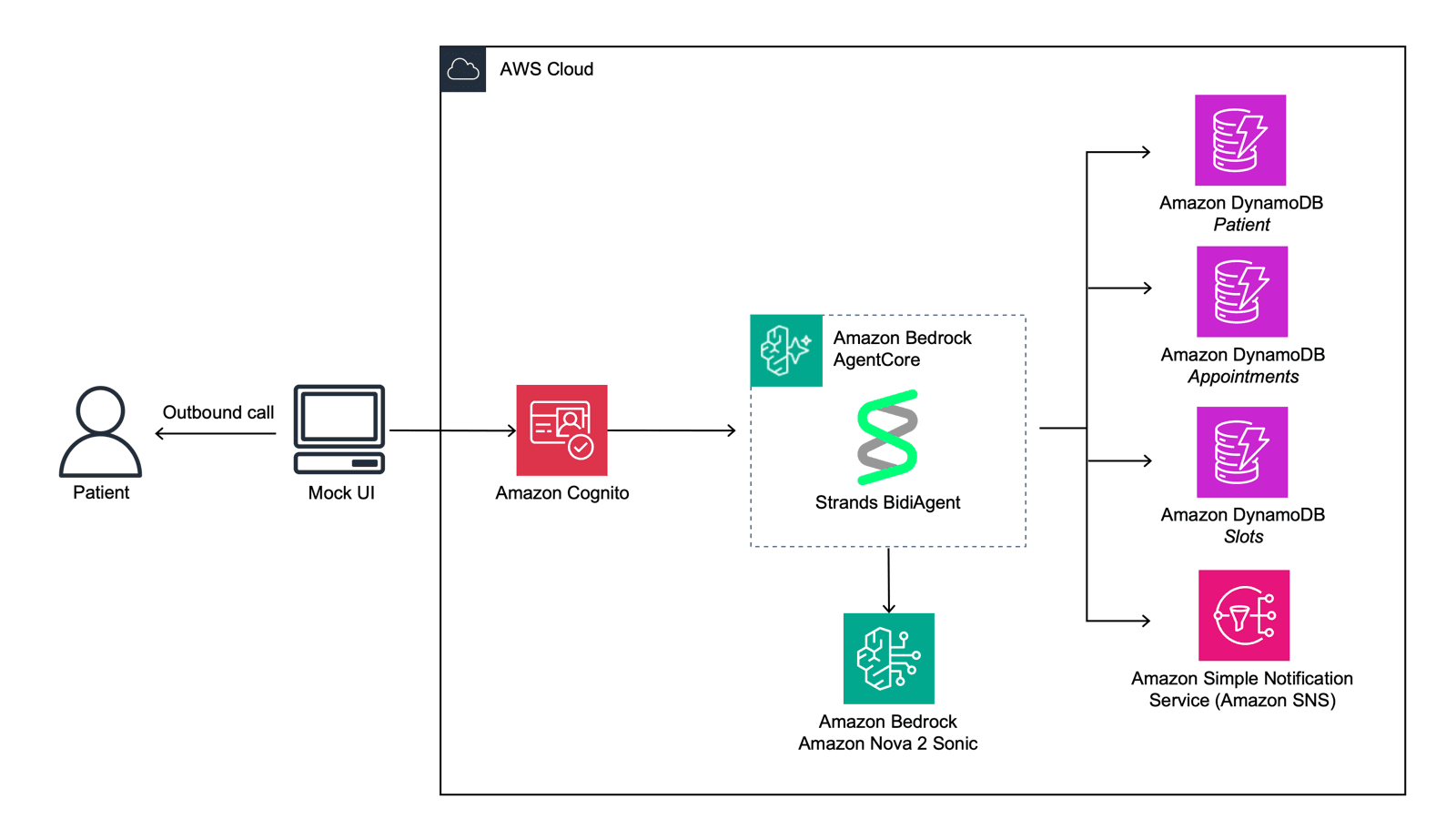
AWS has published a technical guide for building a voice-based healthcare appointment agent using Amazon Nova 2 Sonic and Amazon Bedrock AgentCore. The agent handles patient authentication, appointment confirmation or rescheduling, and health information collection through natural speech conversation. US healthcare no-show rates range from 5-30 percent by specialty, representing significant lost revenue and provider time.
TL;DR
- Amazon Nova 2 Sonic processes speech natively end-to-end, preserving vocal context like tone and hesitation instead of losing it in separate transcription steps
- The agent authenticates patients by voice, manages appointments (confirm, cancel, reschedule), collects pre-visit health data, and escalates to human staff when needed
- Architecture uses Amazon Bedrock AgentCore, Amazon Cognito, Amazon DynamoDB, and Amazon SNS with a React frontend for browser-based testing
- Integration with Amazon Connect Customer enables outbound dialing to actual phone lines for production deployment
Why It Matters
Healthcare providers lose significant revenue to no-show rates between 5-30 percent depending on specialty. Traditional appointment reminder systems require manual one-by-one calling and don't scale. A voice agent that preserves vocal cues like tone and hesitation can respond more appropriately to patient anxiety or confusion, potentially improving engagement and reducing no-shows.
Business Impact
Automating appointment reminders and rescheduling at scale reduces labor costs and idle provider time while improving patient communication. The speech-to-speech approach avoids latency and context loss from chaining separate transcription, reasoning, and synthesis services, enabling more natural and responsive interactions.
Key Implications
- Healthcare organizations can deploy serverless voice agents without building custom speech pipelines, lowering technical barriers to automation
- Preserving vocal context in a single model may improve patient outcomes by allowing the agent to detect and respond to emotional cues rather than just transcribed words
- Integration with existing telephony services like Amazon Connect makes production deployment feasible for clinic and hospital networks
What to Watch
Monitor adoption rates among healthcare providers and reported changes in no-show rates or patient satisfaction after deployment. Watch for regulatory or compliance considerations around voice authentication and patient data collection in healthcare settings. Track whether other cloud providers release similar speech-to-speech models and how they compare on latency and accuracy.
Subscribe to the newsletter
The latest stories and analysis, delivered to your inbox.
Free. No spam. Unsubscribe any time.


