AWS Bedrock automates intelligent document processing at scale
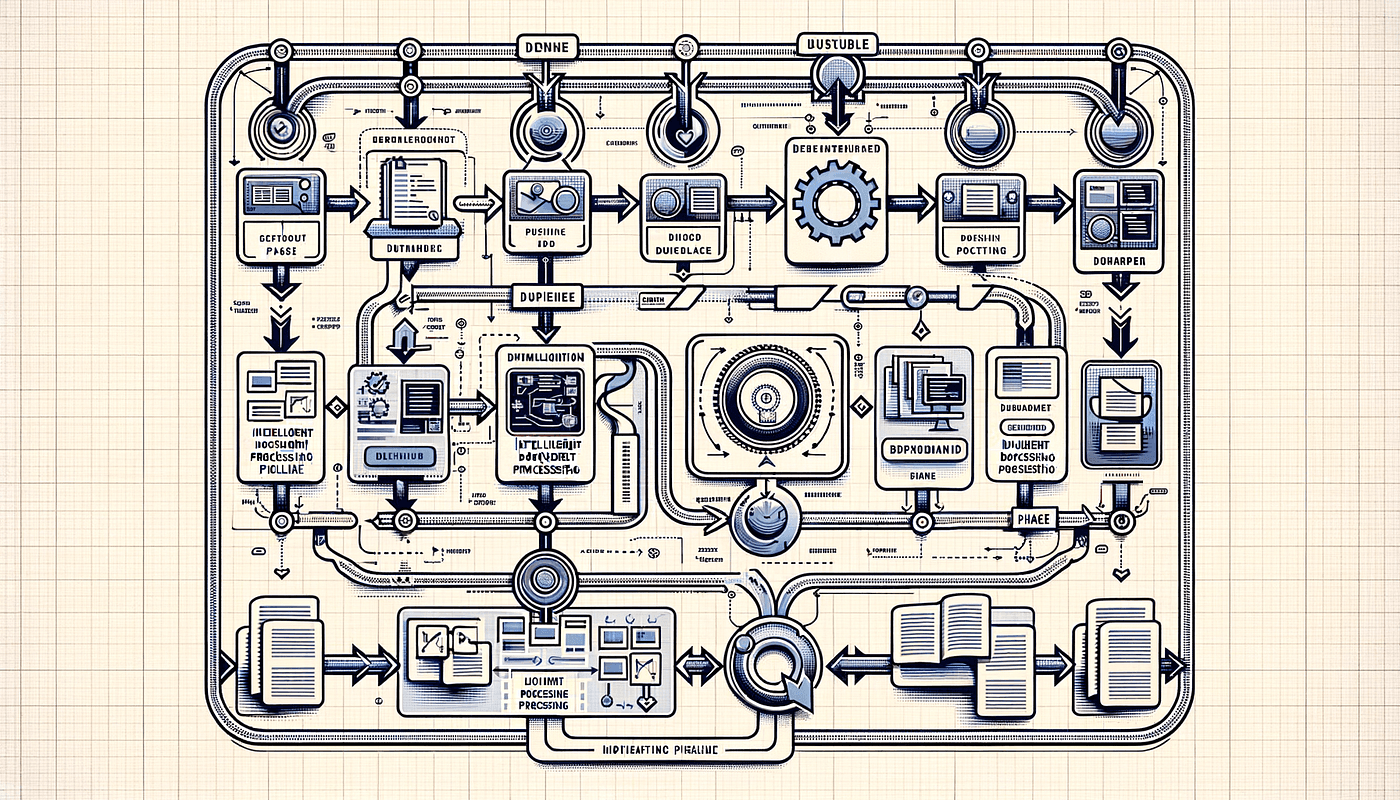
AWS has published guidance on building intelligent document processing pipelines using Amazon Bedrock Data Automation (BDA) and related generative AI services. BDA automates document classification, extraction, normalization, and validation while understanding context and relationships, moving beyond traditional OCR that only extracts text. The service handles up to 3,000 pages and 500 MB per request across multiple file formats, with confidence scoring for accuracy.
TL;DR
- Amazon Bedrock Data Automation automates document processing tasks including classification, extraction, normalization, and validation with contextual understanding
- BDA supports up to 3,000 pages and 500 MB per API request across diverse file formats, enabling large-scale processing
- The solution architecture combines four layers: input processing, extraction and storage, intelligence, and agentic coordination
- BDA provides confidence scores for extracted data and automatically routes documents to appropriate processing blueprints without manual sorting
Why It Matters
Organizations process millions of documents daily, but traditional OCR solutions cannot understand context or relationships within complex documents, creating manual bottlenecks and errors. Generative AI-powered document processing addresses this by automating classification, extraction, and validation while maintaining semantic understanding across multiple data sources. This represents a shift from text-only extraction to intelligent document analysis at scale.
Business Impact
Document processing is a significant cost driver for enterprises handling insurance claims, invoices, contracts, and medical records. Automating extraction with contextual understanding reduces manual intervention, processing time, and error rates. BDA's managed service approach and support for large documents (up to 500 MB) makes intelligent processing accessible without building custom AI infrastructure.
Key Implications
- Organizations can reduce manual document sorting and orchestration overhead by using BDA's automatic classification and routing to appropriate processing blueprints
- Confidence scoring on extracted data enables risk-based review workflows, allowing teams to prioritize high-confidence extractions and focus manual effort on uncertain cases
- The architecture's combination of BDA, Bedrock agents, and knowledge bases enables contextual understanding across multiple documents, supporting complex analysis beyond single-document extraction
What to Watch
Monitor adoption rates among enterprises with high-volume document processing workflows, particularly in financial services, insurance, and healthcare. Watch for competitive offerings from other cloud providers and how pricing scales with document volume and complexity. Track whether confidence scoring and validation capabilities reduce downstream errors and manual review costs in production deployments.
Subscribe to the newsletter
The latest stories and analysis, delivered to your inbox.
Free. No spam. Unsubscribe any time.


