AWS Bedrock AgentCore Enables AI Equipment Repair Assistant
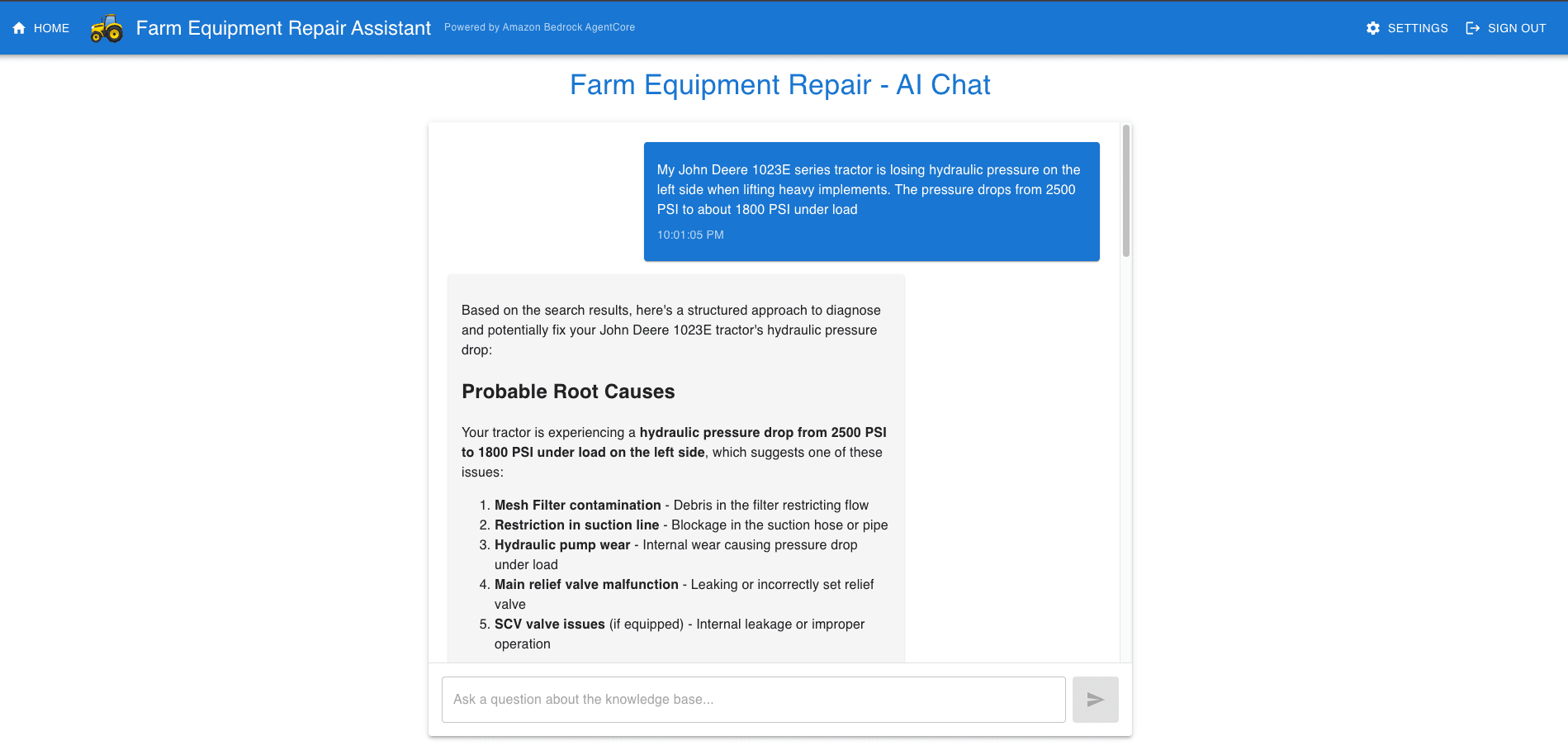
AWS published a technical guide on building an AI-powered equipment repair assistant using Amazon Bedrock AgentCore, designed to help farmers and field technicians diagnose heavy machinery problems and access repair procedures through natural language. The solution combines AgentCore Runtime, Amazon Nova 2 Lite, Bedrock Knowledge Base for retrieval-augmented generation, and conversation memory to reduce diagnostic downtime and site visits. The architecture integrates Amazon Cognito for authentication, AWS Amplify for frontend hosting, and indexed manufacturer documentation for semantic search.
TL;DR
- AWS published a technical tutorial on building an AI repair assistant using Bedrock AgentCore for farm equipment diagnostics
- The solution uses Amazon Nova 2 Lite, Bedrock Knowledge Base with RAG, and AgentCore Memory for persistent conversations
- Architecture combines Cognito authentication, Amplify hosting, and OpenSearch Serverless for semantic search of equipment manuals
- Designed to reduce multiple site visits, extended downtime, and financial losses during equipment failures
Why It Matters
Equipment downtime in agriculture, particularly during harvest season, creates significant operational and financial impact. This tutorial demonstrates how enterprises can deploy conversational AI agents that provide immediate access to manufacturer documentation and repair procedures without requiring technicians to leave the field or wait for expert consultation. The approach shows practical application of agentic AI beyond chatbots, with built-in memory and tool integration for domain-specific problem-solving.
Business Impact
Organizations managing distributed field operations face high costs from diagnostic delays and repeat visits. This architecture pattern, using managed AWS services with RAG and conversation persistence, provides a template for reducing mean time to repair while improving technician productivity. The solution demonstrates how to integrate proprietary knowledge bases with foundation models while maintaining authentication and session management at scale.
Key Implications
- Agentic AI frameworks like AgentCore enable practical enterprise applications beyond conversational interfaces, with tool integration and memory management built in
- RAG patterns using Bedrock Knowledge Base allow organizations to ground AI responses in proprietary documentation without retraining models
- Field service and maintenance operations can adopt AI-assisted diagnostics to reduce downtime and operational costs in time-sensitive industries
What to Watch
Monitor adoption patterns of Bedrock AgentCore in field service, maintenance, and support operations. Watch for how organizations handle knowledge base updates and version control for manufacturer documentation. Track whether this pattern extends to other equipment-heavy industries like construction, mining, or industrial manufacturing.
Subscribe to the newsletter
The latest stories and analysis, delivered to your inbox.
Free. No spam. Unsubscribe any time.


