AWS and NVIDIA Enable Distributed Robot Training on SageMaker AI
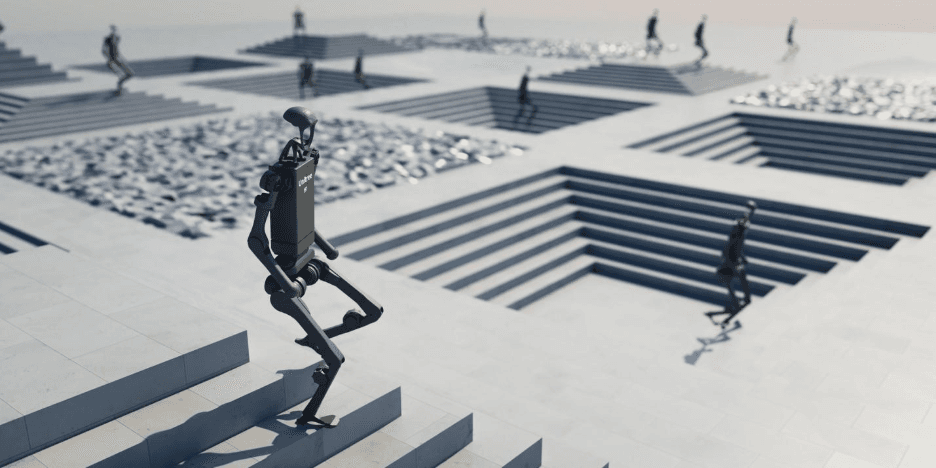
AWS and NVIDIA have published a technical guide for training robot policies using NVIDIA Isaac Lab simulation on Amazon SageMaker AI, demonstrating how to scale reinforcement learning workloads across distributed compute infrastructure. The approach addresses a core challenge in robotics: training complex behaviors like humanoid locomotion in simulation before real-world deployment. Two compute options, SageMaker HyperPod and SageMaker Training Jobs, are presented for different phases of robot policy development, with full code available in a public GitHub repository.
TL;DR
- NVIDIA Isaac Lab can now run on Amazon SageMaker AI for distributed robot reinforcement learning training
- SageMaker HyperPod provides cluster resiliency with automatic node replacement and checkpoint recovery for long-running RL jobs
- SageMaker Training Jobs offer a simpler, serverless option for shorter iterative experiments without infrastructure management
- The solution compresses months of real-world robot training into hours using GPU-accelerated simulation
Why It Matters
Robot training in simulation is faster and safer than real-world learning, but reinforcement learning for complex behaviors like humanoid locomotion is computationally expensive and requires distributed infrastructure. This integration removes the operational burden of managing compute clusters, allowing robotics teams to focus on policy development rather than infrastructure management. The dual-option approach addresses both rapid iteration and production-scale training needs.
Business Impact
Robotics deployment in factories, warehouses, and logistics centers depends on efficient policy training. Reducing training time from months to hours and eliminating infrastructure management overhead lowers the barrier to entry for organizations building production robot systems. The managed service model reduces capital expenditure and operational complexity for teams scaling robot deployments.
Key Implications
- Robotics teams can now iterate on reward functions and model architectures without provisioning or managing their own GPU clusters
- Hardware failures in multi-node training runs are automatically detected and recovered with checkpoint restoration, reducing lost training progress
- Organizations can choose between persistent cluster infrastructure (HyperPod) for long-running jobs or ephemeral training jobs for short experiments, matching compute costs to workload patterns
What to Watch
Monitor adoption patterns among robotics teams to understand whether HyperPod or Training Jobs becomes the preferred option for different workload types. Watch for performance benchmarks comparing single-node versus distributed training on this stack, and track whether other simulation frameworks beyond Isaac Lab are integrated into SageMaker AI for robotics use cases.
Subscribe to the newsletter
The latest stories and analysis, delivered to your inbox.
Free. No spam. Unsubscribe any time.


