VFF - The signal in the noise
News

Oura Health Files for IPO, Advancing Health Wearables to Public Markets
Julia HornsteinRead original
Share
Oura Health Files for IPO, Advancing Health Wearables to Public Markets

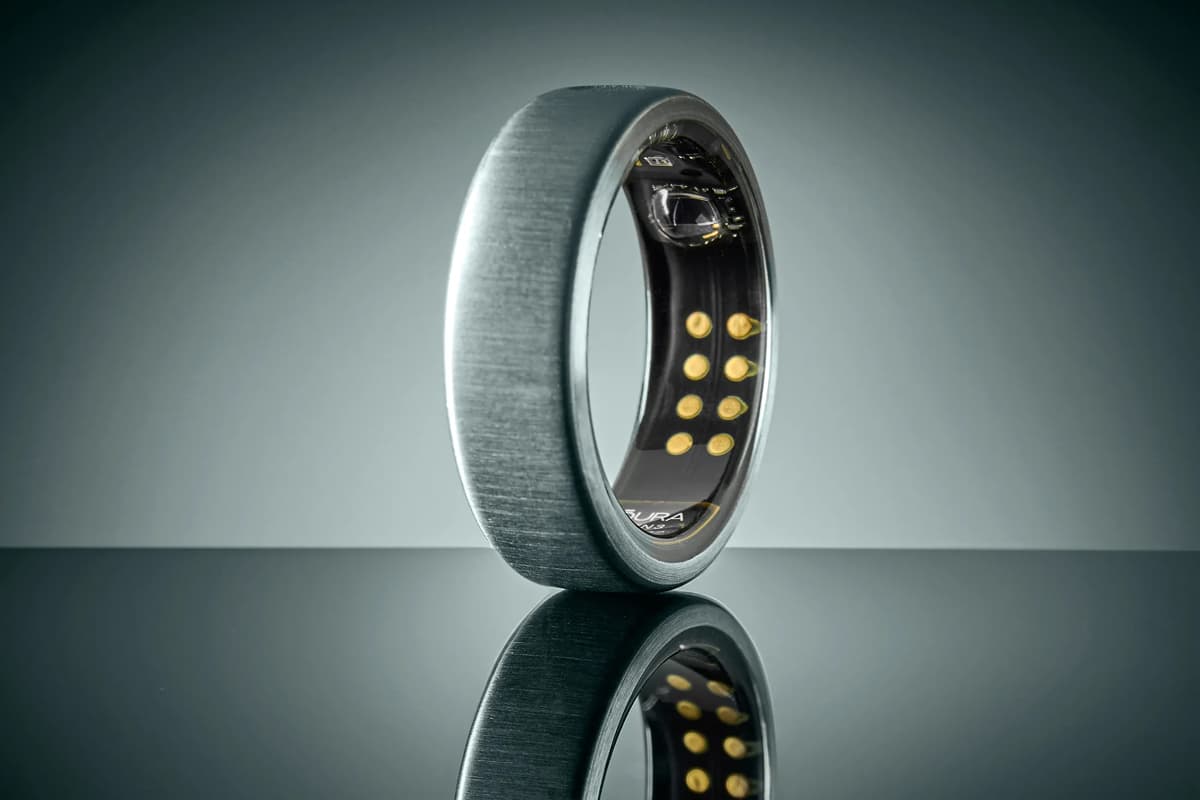
Oura Health, the health-tracking ring maker, filed confidential IPO paperwork with the SEC on Thursday. The company has not yet disclosed share count or pricing details. The filing marks a significant step toward public markets for the wearable health technology sector.

Oura Health, a leading manufacturer of health-tracking rings, has filed confidential IPO paperwork with the SEC, marking a pivotal moment for the wearable health technology sector's maturation toward public markets. The confidential filing allows the company to test investor interest and refine its offering before making details public. This move signals growing institutional confidence in consumer health wearables as a viable investment category.

  • Oura Health's IPO filing represents the first major public market entry for a standalone health wearable ring manufacturer, validating the category's commercial viability.
  • Confidential filing procedures allow the company to gauge market demand and optimize valuation strategy before public disclosure of share count and pricing.
  • The filing underscores investor appetite for personalized health monitoring technology as consumers increasingly demand non-invasive, continuous biometric tracking solutions.
  • A successful Oura IPO could accelerate capital formation across the broader wearables ecosystem, including competitors and adjacent health tech companies.
  • The transaction timing reflects strong exit activity in digital health following years of significant venture funding into the sector.

Oura's IPO filing signals that consumer health wearables have matured from niche lifestyle products into a legitimate asset class worthy of public market scrutiny and capital. Success here could unlock substantial growth capital for the entire wearables sector while establishing performance benchmarks that shape future investment and M&A activity.

Oura Health's confidential IPO filing represents a watershed moment for the health wearables industry, which has experienced explosive growth over the past five years driven by consumer demand for continuous health monitoring and preventive wellness insights. The company's ring-based form factor has differentiated itself from smartwatch competitors by emphasizing passive, unobtrusive health tracking with particular strength in sleep and recovery metrics, building a loyal subscriber base that generates recurring revenue through software and insights. The confidential filing process, enabled by JOBS Act provisions, allows Oura to test investor appetite and refine its narrative before entering the intensive scrutiny of public registration, a particularly valuable mechanism for companies in rapidly evolving categories where valuation benchmarks remain uncertain. The timing reflects broader momentum in digital health exit activity, with venture investors actively seeking liquidity events after years of substantial capital deployment into fitness, biometric sensing, and remote monitoring technologies. A successful public offering would validate the business model for Oura's competitors, including Whoop and emerging entrants, potentially triggering a wave of follow-on IPOs and accelerating consolidation in the fragmented wearables market.

The wearables industry stands at an inflection point where consumer adoption and clinical validation are finally converging to support sustainable business models at scale. Oura's move toward public markets suggests investor confidence that continuous biometric data collection will drive meaningful engagement and retention, particularly as health systems increasingly integrate wearable signals into clinical decision-making. However, investors will scrutinize churn rates, average revenue per user, and the path to profitability in a category where hardware commoditization and data privacy concerns present ongoing headwinds.

  1. Monitor Oura's public filing disclosures when made available to assess unit economics, customer acquisition costs, and retention metrics as benchmarks for comparable wearables companies.
  2. Evaluate competitive positioning within your portfolio or competitive set against Oura's differentiation strategy, particularly around sleep tracking, recurring revenue models, and clinical partnerships.
  3. Assess regulatory and reimbursement tailwinds that may strengthen Oura's path to profitability, including any movement toward FDA clearance for specific health claims or insurance coverage.
  4. Consider the broader capital formation implications for wearables sector funding, including how a successful IPO might impact venture funding dynamics and valuations for pre-IPO competitors.
Share

Our Briefing

Weekly signal. No noise. Built for founders, operators, and AI-curious professionals.

No spam. Unsubscribe any time.

Related stories

AdventHealth deploys ChatGPT to cut administrative burden
News

AdventHealth deploys ChatGPT to cut administrative burden

AdventHealth is deploying ChatGPT for Healthcare to streamline clinical and administrative workflows, with the goal of reducing administrative burden on staff and freeing up time for direct patient care. The health system is using OpenAI's healthcare-specific model to handle workflow optimization tasks. This represents a practical application of generative AI in healthcare operations rather than clinical decision-making.

about 6 hours ago· OpenAI
AI Discovers Security Flaws Faster Than Humans Can Patch Them

AI Discovers Security Flaws Faster Than Humans Can Patch Them

Recent high-profile breaches at startups like Mercor and Vercel, combined with Anthropic's disclosure that its Mythos AI model identified thousands of previously unknown cybersecurity vulnerabilities, underscore growing demand for AI-powered security solutions. The article argues that cybersecurity vendors CrowdStrike and Palo Alto Networks, which are integrating AI into their threat detection and response capabilities, represent undervalued investment opportunities as enterprises face mounting pressure to defend against both conventional and AI-discovered attack vectors.

23 days ago· The Information
AWS Launches G7e GPU Instances for Cheaper Large Model Inference
TrendingModel Release

AWS Launches G7e GPU Instances for Cheaper Large Model Inference

AWS has launched G7e instances on Amazon SageMaker AI, powered by NVIDIA RTX PRO 6000 Blackwell GPUs with 96 GB of GDDR7 memory per GPU. The instances deliver up to 2.3x inference performance compared to previous-generation G6e instances and support configurations from 1 to 8 GPUs, enabling deployment of large language models up to 300B parameters on the largest 8-GPU node. This represents a significant upgrade in memory bandwidth, networking throughput, and model capacity for generative AI inference workloads.

about 1 month ago· AWS Machine Learning Blog
Anthropic Launches Claude Design for Non-Designers
Model Release

Anthropic Launches Claude Design for Non-Designers

Anthropic has launched Claude Design, a new product aimed at helping non-designers like founders and product managers create visuals quickly to communicate their ideas. The tool addresses a gap for early-stage teams and individuals who need to share concepts visually but lack design expertise or resources. Claude Design integrates with Anthropic's Claude AI platform, leveraging its capabilities to streamline the visual creation process. The launch reflects growing demand for AI-powered design tools that lower barriers to entry for non-technical users.

about 1 month ago· TechCrunch AI