VFF - The signal in the noise
News

Google's AI Science Pivot: From Tools to Autonomous Agents
Grace HuckinsRead original
Share
Google's AI Science Pivot: From Tools to Autonomous Agents

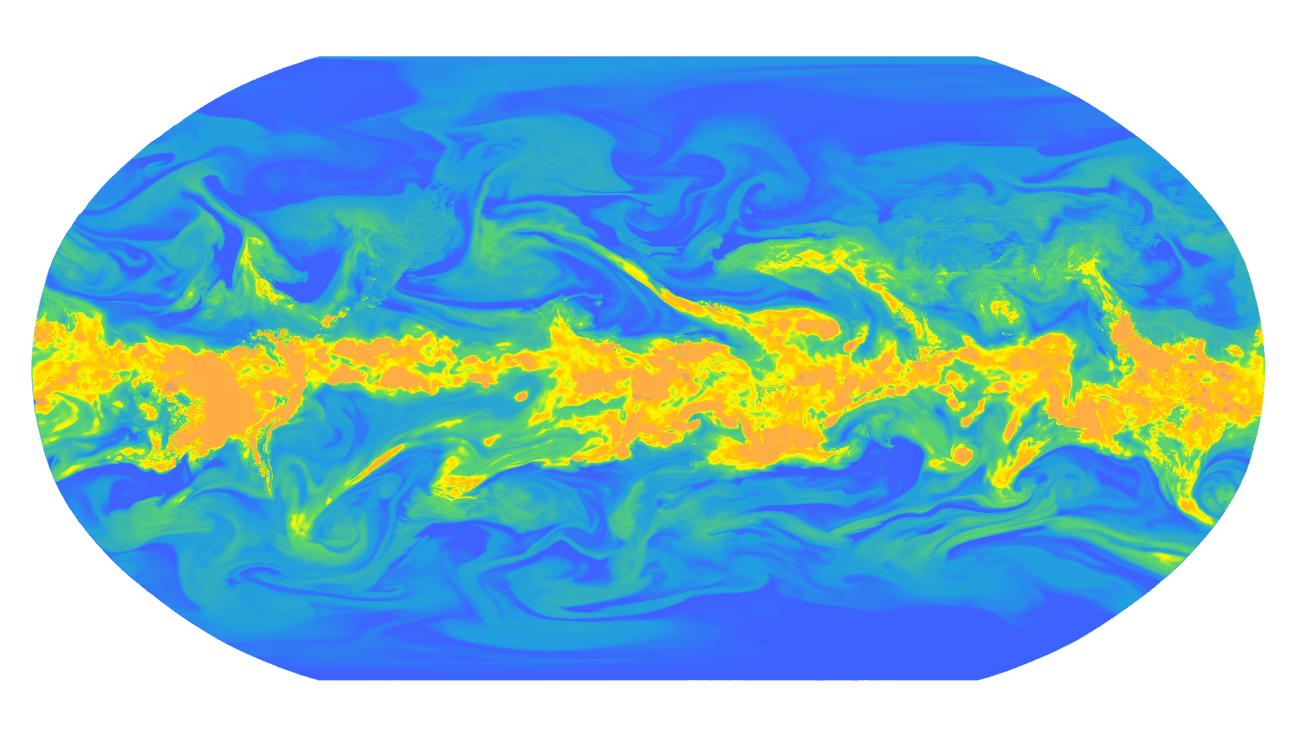
Google's I/O keynote revealed a strategic shift in how the company approaches AI for science. While CEO Demis Hassabis invoked singularity rhetoric, the centerpiece was WeatherNext, a specialized tool that predicted Hurricane Melissa's path. The tension between specialized scientific tools like WeatherNext and emerging agentic AI systems that could conduct research autonomously reflects a broader industry realignment toward the latter approach.

Google's I/O keynote demonstrated a strategic pivot toward autonomous AI agents for scientific research, moving beyond specialized tools like WeatherNext. While the company invoked singularity rhetoric through CEO Demis Hassabis, the practical centerpiece revealed the industry's broader realignment from task-specific AI applications to general-purpose agentic systems capable of conducting research autonomously.

  • Google is shifting its AI science strategy from specialized, narrow tools to autonomous agents that can conduct multi-step research independently.
  • WeatherNext exemplifies the previous generation of AI-for-science: highly accurate for specific domains but limited to predefined tasks without autonomous reasoning.
  • The tension between specialized tools and agentic systems reflects a fundamental industry debate about the future architecture of AI-driven scientific discovery.
  • Demis Hassabis's singularity framing masks a more pragmatic focus on building systems that can handle complex, open-ended scientific problems.

This shift signals where major AI labs are directing R&D investment and talent, directly impacting how scientific research will be conducted over the next 5-10 years. Companies and research institutions must understand whether to build specialized AI applications or wait for general-purpose agentic platforms that could displace narrowly-tailored solutions.

Google's presentation of WeatherNext at I/O serves as both a showcase of current AI capabilities and an implicit acknowledgment of their limitations. WeatherNext delivers exceptional accuracy for hurricane prediction, a constrained problem with well-defined inputs, outputs, and success metrics. However, scientific discovery typically requires navigating uncertainty, reformulating hypotheses, accessing diverse data sources, and integrating insights across domains, tasks that neither WeatherNext nor similar specialized tools are designed to handle autonomously.

The industry's pivot toward autonomous agents represents a response to these limitations. Rather than building purpose-built systems for weather prediction, drug discovery, materials science, and genomics separately, the emerging paradigm attempts to create agents that can reason about problems, devise experimental strategies, execute tasks, and learn from results with minimal human intervention. This approach mirrors how human researchers work across disciplines, suggesting higher scalability and transferability.

Hassabis's singularity rhetoric in the keynote appears partly strategic messaging and partly genuine conviction about where AI is headed. However, the practical emphasis on agents rather than larger models or new fundamental breakthroughs suggests that Google sees the near-term value in systems that can act independently and iteratively, rather than in raw prediction performance. This creates a critical inflection point for the industry: specialized tools like WeatherNext will likely persist for high-stakes predictions, but investment capital and talent are flowing toward agentic research platforms that promise broader applicability.

The timing matters significantly. If autonomous agents prove capable of meaningful scientific contributions within the next two to three years, researchers and institutions adopting this approach will gain competitive advantage in hypothesis generation, experimental design, and insight synthesis. Conversely, early adoption risks depend on whether these agents can truly operate autonomously or merely augment human researchers.

This shift reflects a maturing understanding that narrow AI excellence, while valuable, hits diminishing returns for complex scientific problems. The industry consensus is moving toward autonomous systems as the next frontier, though skeptics question whether current agentic architectures can genuinely conduct open-ended research or merely optimize within constrained problem spaces. Google's messaging suggests confidence that this transition is underway, but execution risks remain substantial.

  1. Research institutions and corporations should evaluate whether their scientific workflows are suitable for autonomous agent integration or remain dependent on specialized tools for critical applications.
  2. Technology leaders should monitor the performance of autonomous agentic systems in published research over the next 18-24 months to assess whether the transition from specialized tools is justified.
  3. Companies developing AI-for-science products should clarify their positioning: specialization for high-precision domain tasks or building toward general agentic research capabilities.
  4. Strategy teams should assess how autonomous agents might reshape competitive advantage in sectors where scientific discovery is central, such as pharmaceuticals, materials science, and climate modeling.

Related Video

Share

Our Briefing

Weekly signal. No noise. Built for founders, operators, and AI-curious professionals.

No spam. Unsubscribe any time.

Related stories

AdventHealth deploys ChatGPT to cut administrative burden
News

AdventHealth deploys ChatGPT to cut administrative burden

AdventHealth is deploying ChatGPT for Healthcare to streamline clinical and administrative workflows, with the goal of reducing administrative burden on staff and freeing up time for direct patient care. The health system is using OpenAI's healthcare-specific model to handle workflow optimization tasks. This represents a practical application of generative AI in healthcare operations rather than clinical decision-making.

about 12 hours ago· OpenAI
AI Discovers Security Flaws Faster Than Humans Can Patch Them

AI Discovers Security Flaws Faster Than Humans Can Patch Them

Recent high-profile breaches at startups like Mercor and Vercel, combined with Anthropic's disclosure that its Mythos AI model identified thousands of previously unknown cybersecurity vulnerabilities, underscore growing demand for AI-powered security solutions. The article argues that cybersecurity vendors CrowdStrike and Palo Alto Networks, which are integrating AI into their threat detection and response capabilities, represent undervalued investment opportunities as enterprises face mounting pressure to defend against both conventional and AI-discovered attack vectors.

23 days ago· The Information
AWS Launches G7e GPU Instances for Cheaper Large Model Inference
TrendingModel Release

AWS Launches G7e GPU Instances for Cheaper Large Model Inference

AWS has launched G7e instances on Amazon SageMaker AI, powered by NVIDIA RTX PRO 6000 Blackwell GPUs with 96 GB of GDDR7 memory per GPU. The instances deliver up to 2.3x inference performance compared to previous-generation G6e instances and support configurations from 1 to 8 GPUs, enabling deployment of large language models up to 300B parameters on the largest 8-GPU node. This represents a significant upgrade in memory bandwidth, networking throughput, and model capacity for generative AI inference workloads.

about 1 month ago· AWS Machine Learning Blog
Anthropic Launches Claude Design for Non-Designers
Model Release

Anthropic Launches Claude Design for Non-Designers

Anthropic has launched Claude Design, a new product aimed at helping non-designers like founders and product managers create visuals quickly to communicate their ideas. The tool addresses a gap for early-stage teams and individuals who need to share concepts visually but lack design expertise or resources. Claude Design integrates with Anthropic's Claude AI platform, leveraging its capabilities to streamline the visual creation process. The launch reflects growing demand for AI-powered design tools that lower barriers to entry for non-technical users.

about 1 month ago· TechCrunch AI