VFF - The signal in the noise
NewsTrending

Google TV Adds Gemini Photo and Video Tools
Read original
Share
Google TV Adds Gemini Photo and Video Tools

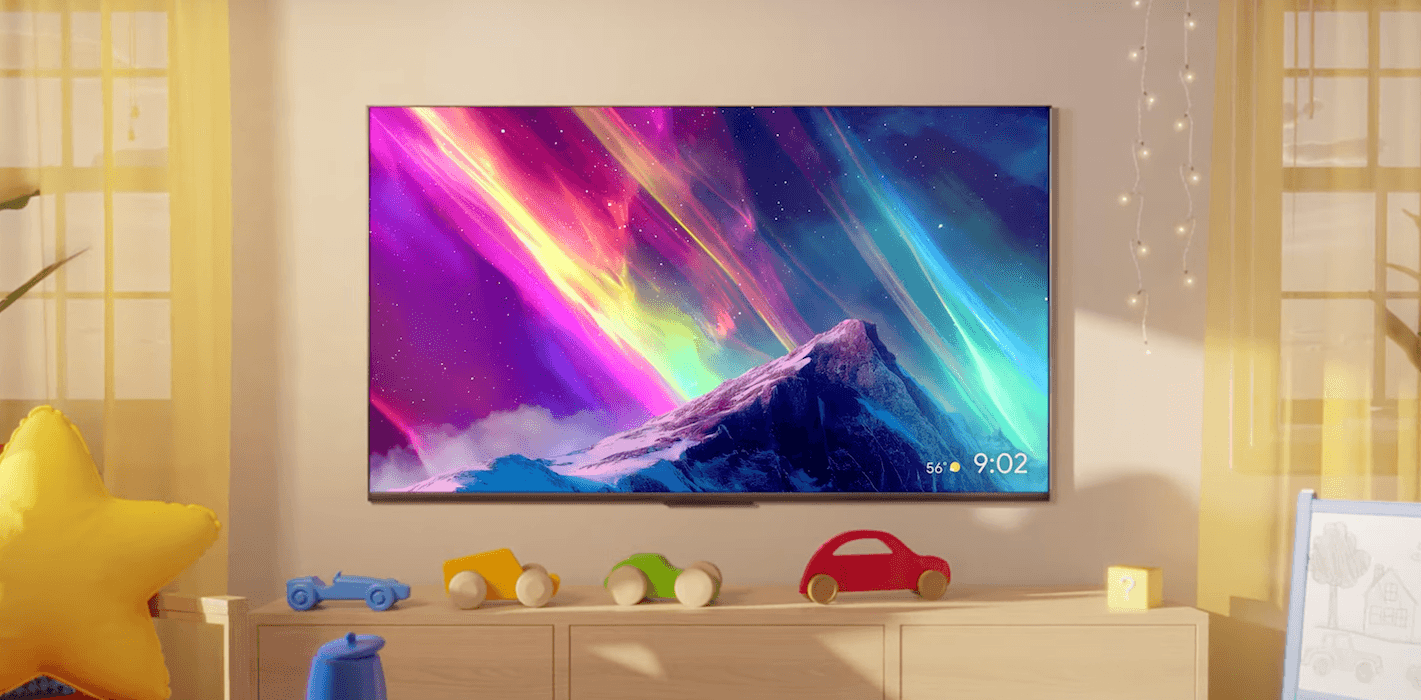
Google TV is integrating additional Gemini AI features, including photo and video transformation capabilities powered by tools called Nano Banana and Veo. The expansion brings generative AI capabilities directly into the TV interface, allowing users to edit and create visual content without leaving the platform. This move positions Google TV as a hub for AI-powered media consumption and creation rather than passive viewing alone.

  • Google TV gains new Gemini features for photo and video transformation
  • Tools named Nano Banana and Veo enable content creation and editing on TV
  • Expands Gemini's presence beyond search and productivity into home entertainment
  • Signals Google's strategy to embed AI capabilities across consumer hardware

This reflects the broader industry shift toward embedding generative AI into everyday consumer devices and interfaces. By bringing image and video generation tools to TV, Google is making AI-powered content creation more accessible to mainstream users in a natural consumption context, rather than requiring separate apps or desktop tools.

For operators and developers, this demonstrates Google's commitment to making Google TV a platform for AI-driven services beyond advertising and content discovery. It creates new opportunities for third-party integrations and raises the bar for competing TV platforms to offer similar AI-native features.

  • Google TV transitions from a content consumption platform to a content creation and transformation hub
  • Nano Banana and Veo integration suggests Google is leveraging smaller, efficient models suitable for edge processing on TV hardware
  • Positions Google to capture more user engagement and time spent on TV devices through AI-powered creative tools

Monitor whether these features drive measurable increases in Google TV usage and engagement. Watch for competitive responses from Amazon Fire TV, Roku, and Samsung SmartTV platforms, and track how third-party developers adopt or build around these Gemini capabilities.

Share

Subscribe to the newsletter

The latest stories and analysis, delivered to your inbox.

Free. No spam. Unsubscribe any time.

Related stories

Google DeepMind Launches Sign Language AI for Deaf Users
TrendingNews

Google DeepMind Launches Sign Language AI for Deaf Users

Google DeepMind has introduced sign-language-to-text (SL2T), a new AI model that converts sign language into text for Deaf and hard of hearing users. The model powers new sign language features designed to improve accessibility. The announcement marks a significant step in making AI tools more inclusive for sign language users.

· Google Deepmind
NVIDIA Opens Alpamayo 2 Super for Commercial AV Use
TrendingModel Release

NVIDIA Opens Alpamayo 2 Super for Commercial AV Use

NVIDIA has released Alpamayo 2 Super, an open-source reasoning model for autonomous vehicles, under a permissive commercial license. The model ranks first on autonomous driving benchmarks and is designed to handle complex, rare scenarios that challenge AV systems. The release includes a cloud-to-vehicle workflow that pairs frontier-scale reasoning in development with efficient, specialized models for production deployment.

by Jessica Soares· NVIDIA Blog (AI)
Google DeepMind Releases Gemini Robotics 2 for Whole-Body Robot Control
TrendingModel Release

Google DeepMind Releases Gemini Robotics 2 for Whole-Body Robot Control

Google DeepMind introduced Gemini Robotics 2, a suite of AI models designed to give robots whole-body control, dexterous manipulation, and multi-robot collaboration capabilities. The system includes three models: a vision-language-action model for motor control, an embodied reasoning model for planning and communication, and an on-device model optimized for fast adaptation to new robot bodies. Early-access partners can now deploy these models on humanoid and bi-arm robots to perform complex, multi-step tasks in unstructured environments.

· Google Deepmind
Brain Waves Join Video as Physical AI Training Data
TrendingNews

Brain Waves Join Video as Physical AI Training Data

Frontier physical AI models are moving beyond video training data to incorporate multiple camera angles, dense annotation, and brain wave readings as training inputs. The shift reflects growing recognition that traditional video datasets alone are insufficient for training AI systems that interact with the physical world. Brain wave data represents an emerging frontier in multimodal training approaches for robotics and embodied AI.

by Tim Fernholz· TechCrunch AI