vff — the signal in the noise
NewsTrending

OpenAI Scales Stargate to Build AGI-Grade Compute
Read original
Share
OpenAI Scales Stargate to Build AGI-Grade Compute

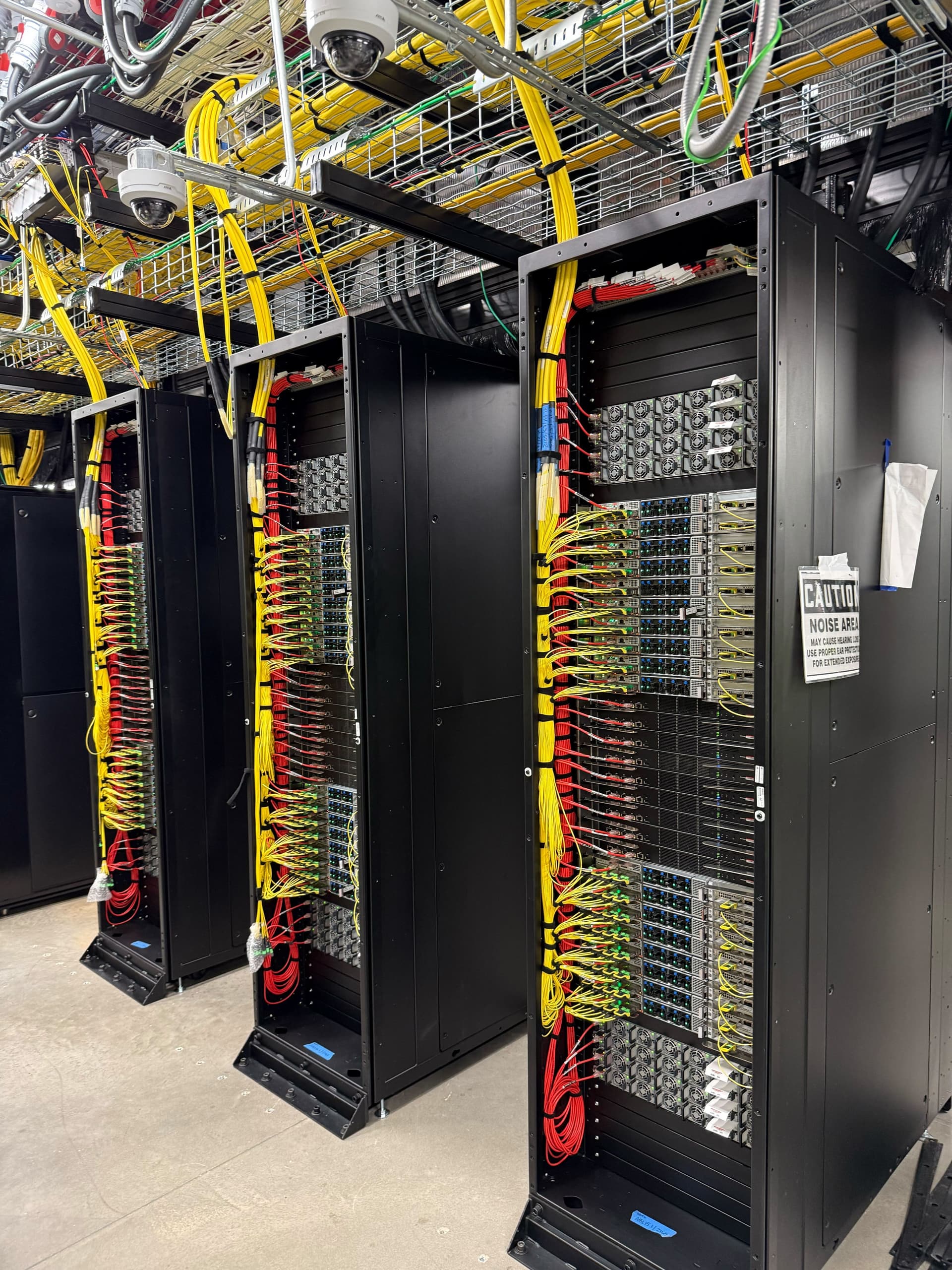
OpenAI is scaling its Stargate infrastructure project to expand data center capacity and support the computational demands required for advancing toward artificial general intelligence. The move reflects the company's strategy to secure the compute resources necessary for training and deploying increasingly capable AI models. This expansion addresses a critical bottleneck in the AI industry: the availability of sufficient computational infrastructure to support next-generation model development and deployment at scale.

TL;DR

  • OpenAI is scaling Stargate, its compute infrastructure initiative, to add new data center capacity
  • The expansion is designed to meet growing demand for AI compute resources needed for AGI development
  • Infrastructure investment is becoming a core competitive lever in the AI industry
  • Securing adequate compute capacity is essential for training and deploying frontier AI models

Why it matters

Compute infrastructure has become a fundamental constraint in AI development. As models grow larger and more capable, the computational resources required to train and run them increase exponentially. OpenAI's Stargate expansion signals that infrastructure investment is now as critical as algorithmic innovation for advancing the field, and it underscores the capital intensity of frontier AI development.

Business relevance

For operators and founders building AI products, compute availability and cost directly impact feasibility and margins. OpenAI's infrastructure play affects the broader ecosystem by influencing compute pricing, availability, and the competitive dynamics around who can afford to train frontier models. Companies dependent on cloud compute or API access will be affected by how infrastructure capacity evolves.

Key implications

  • Compute infrastructure is becoming a defensible competitive moat for well-capitalized AI labs
  • Data center buildout timelines and capital requirements are rising, favoring companies with access to significant funding and partnerships
  • Compute scarcity may persist as a bottleneck, potentially limiting the number of organizations capable of training frontier models

What to watch

Monitor OpenAI's Stargate deployment timeline and capacity additions to gauge how quickly compute constraints are being addressed. Watch for similar infrastructure announcements from other labs like Anthropic, Google, and Meta, as well as developments in chip supply chains and energy availability, which are critical enablers for large-scale data center expansion.

Share

vff Briefing

Weekly signal. No noise. Built for founders, operators, and AI-curious professionals.

No spam. Unsubscribe any time.

Related stories

AI Discovers Security Flaws Faster Than Humans Can Patch Them

AI Discovers Security Flaws Faster Than Humans Can Patch Them

Recent high-profile breaches at startups like Mercor and Vercel, combined with Anthropic's disclosure that its Mythos AI model identified thousands of previously unknown cybersecurity vulnerabilities, underscore growing demand for AI-powered security solutions. The article argues that cybersecurity vendors CrowdStrike and Palo Alto Networks, which are integrating AI into their threat detection and response capabilities, represent undervalued investment opportunities as enterprises face mounting pressure to defend against both conventional and AI-discovered attack vectors.

1 day ago· The Information
Lightweight Model Beats GPT-4o at Robot Gesture Prediction
Research

Lightweight Model Beats GPT-4o at Robot Gesture Prediction

Researchers have developed a lightweight transformer model that generates co-speech gestures for robots by predicting both semantic gesture placement and intensity from text and emotion signals alone, without requiring audio input at inference time. The model outperforms GPT-4o on the BEAT2 dataset for both gesture classification and intensity regression tasks. The approach is computationally efficient enough for real-time deployment on embodied agents, addressing a gap in current robot systems that typically produce only rhythmic beat-like motions rather than semantically meaningful gestures.

6 days ago· ArXiv (cs.AI)
AWS Launches G7e GPU Instances for Cheaper Large Model Inference
TrendingModel Release

AWS Launches G7e GPU Instances for Cheaper Large Model Inference

AWS has launched G7e instances on Amazon SageMaker AI, powered by NVIDIA RTX PRO 6000 Blackwell GPUs with 96 GB of GDDR7 memory per GPU. The instances deliver up to 2.3x inference performance compared to previous-generation G6e instances and support configurations from 1 to 8 GPUs, enabling deployment of large language models up to 300B parameters on the largest 8-GPU node. This represents a significant upgrade in memory bandwidth, networking throughput, and model capacity for generative AI inference workloads.

9 days ago· AWS Machine Learning Blog
Anthropic Launches Claude Design for Non-Designers
Model Release

Anthropic Launches Claude Design for Non-Designers

Anthropic has launched Claude Design, a new product aimed at helping non-designers like founders and product managers create visuals quickly to communicate their ideas. The tool addresses a gap for early-stage teams and individuals who need to share concepts visually but lack design expertise or resources. Claude Design integrates with Anthropic's Claude AI platform, leveraging its capabilities to streamline the visual creation process. The launch reflects growing demand for AI-powered design tools that lower barriers to entry for non-technical users.

10 days ago· TechCrunch AI