Runway CEO: AI Could Fund 50 Films for Cost of One Blockbuster
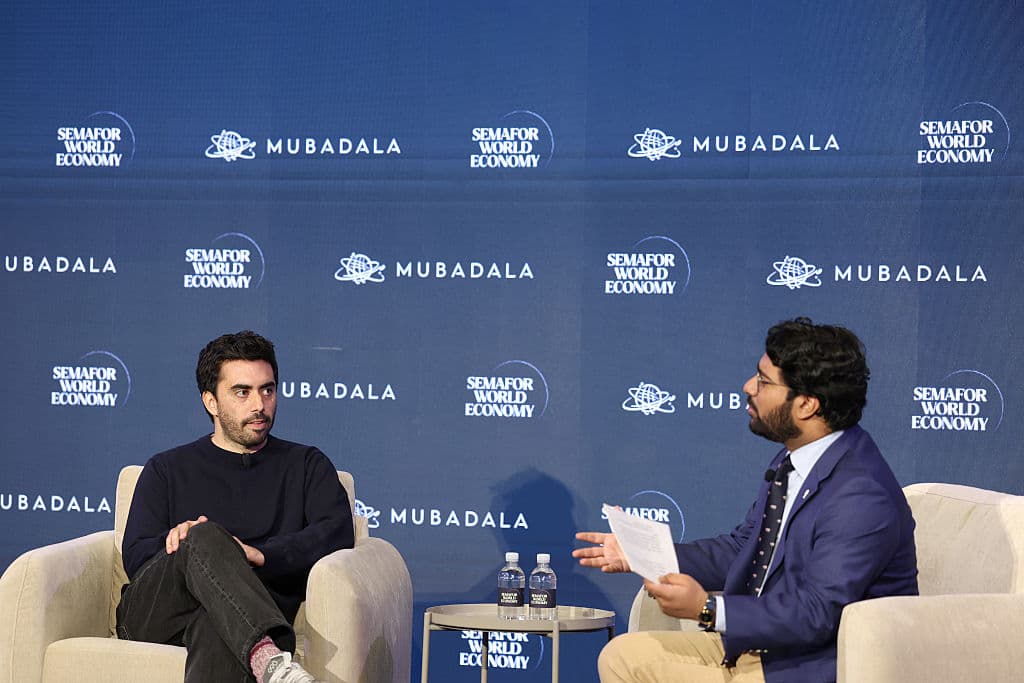
Runway's CEO argues that AI video generation could fundamentally reshape Hollywood's economics by enabling studios to produce 50 films for the cost of a single $100 million blockbuster. The pitch centers on volume as a path to hit-making, where lower per-project costs allow studios to take more creative risks and increase their odds of finding breakout successes. This reflects a broader shift in how AI tooling is being positioned to media companies, not as a replacement for human creativity but as a cost-reduction lever that changes risk calculus in content production.
TL;DR
- Runway CEO proposes AI video tools could reduce production costs enough to fund 50 films instead of one $100M blockbuster
- Strategy relies on volume economics: more bets increase probability of hits despite lower individual budgets
- Reflects positioning of AI as cost-reduction tool rather than creative replacement in entertainment
- Signals growing confidence in AI video capabilities reaching production-grade quality
Why It Matters
This statement crystallizes how generative AI is being framed as a structural economic disruptor in entertainment, not just a marginal efficiency gain. If AI video tools can genuinely reduce production costs by 50x or more, it reshapes studio incentives away from risk-averse blockbuster strategies toward portfolio approaches that favor experimentation and volume. The claim also tests whether AI video quality has reached a threshold where studios view it as viable for commercial releases.
Business Impact
For founders in video AI, this is validation that the addressable market extends beyond post-production or asset creation into core production workflows. For studios and production companies, the economics could unlock new business models: lower-cost content pipelines, faster iteration cycles, and reduced downside on experimental projects. For investors, it signals a potential inflection point where AI video moves from proof-of-concept to revenue-generating tool.
Key Implications
- Studio economics could shift from blockbuster-dependent models to portfolio strategies with higher volume and lower per-project risk
- AI video quality must reach production-grade standards for this thesis to hold, putting pressure on Runway and competitors to deliver
- Talent and labor dynamics in entertainment may face pressure if AI tools genuinely reduce crew and production overhead at scale
- Success depends on whether audiences accept AI-assisted or AI-generated content, a cultural and commercial question still unresolved
What to Watch
Monitor whether major studios actually greenlight projects using AI video tools at meaningful scale and what quality benchmarks they set. Track how Runway's product roadmap evolves to address production-grade requirements like consistency, control, and integration with existing workflows. Watch for labor union responses and regulatory scrutiny around AI-generated content disclosure and creator attribution.
Subscribe to the newsletter
The latest stories and analysis, delivered to your inbox.
Free. No spam. Unsubscribe any time.