OpenAI Adds Native Sandbox Execution to Agents SDK
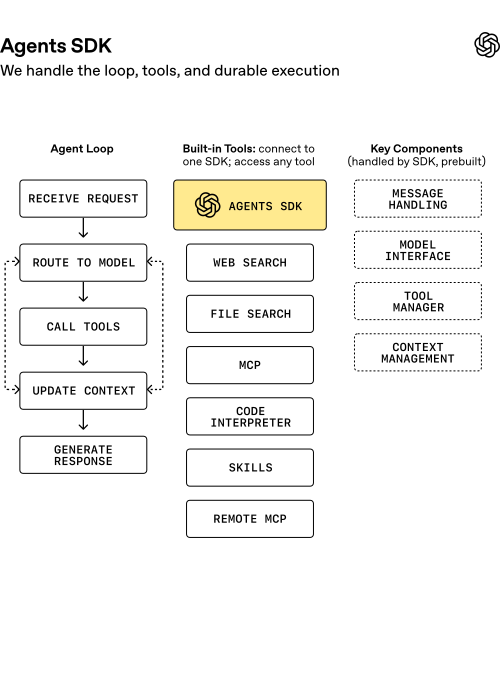
OpenAI has released an updated Agents SDK featuring native sandbox execution and a model-native harness designed to streamline secure agent development. The update enables developers to build long-running agents that can safely interact with files and external tools without requiring custom infrastructure. This represents a shift toward making agent development more accessible and standardized across OpenAI's platform.
TL;DR
- OpenAI released an updated Agents SDK with native sandbox execution capabilities
- New model-native harness simplifies building long-running agents with file and tool access
- Sandbox execution provides security isolation for agent operations
- Update targets developers building production-grade autonomous systems
Why It Matters
Agent development has been a bottleneck for teams wanting to deploy autonomous systems in production. By embedding sandbox execution and a standardized harness directly into the SDK, OpenAI is reducing friction around security and infrastructure concerns that have historically required custom engineering. This moves agent development closer to the ease of standard API integration.
Business Impact
For founders and operators building agent-based products, this update lowers the engineering overhead required to ship secure, long-running systems. Teams can now focus on agent logic and integration rather than building custom sandboxing and execution layers, accelerating time to market for agent-powered applications.
Key Implications
- Sandbox execution as a native feature reduces security review burden and enables faster deployment of agent systems
- Model-native harness standardizes how agents interact with tools and files, potentially creating ecosystem lock-in around OpenAI's platform
- Lower barrier to entry for agent development may accelerate adoption among mid-market and enterprise teams currently hesitant about agent complexity
What to Watch
Monitor whether competing platforms (Anthropic, Google) release similar sandbox and harness features to remain competitive. Watch for adoption metrics among enterprise teams and whether the standardized approach becomes a de facto industry pattern. Also track whether the sandbox execution model becomes a constraint for teams needing custom security or execution policies.
Our Briefing
Weekly signal. No noise. Built for founders, operators, and AI-curious professionals.
No spam. Unsubscribe any time.


