NVIDIA Open-Sources Robot AI Stack to Bridge Simulation-to-Production Gap
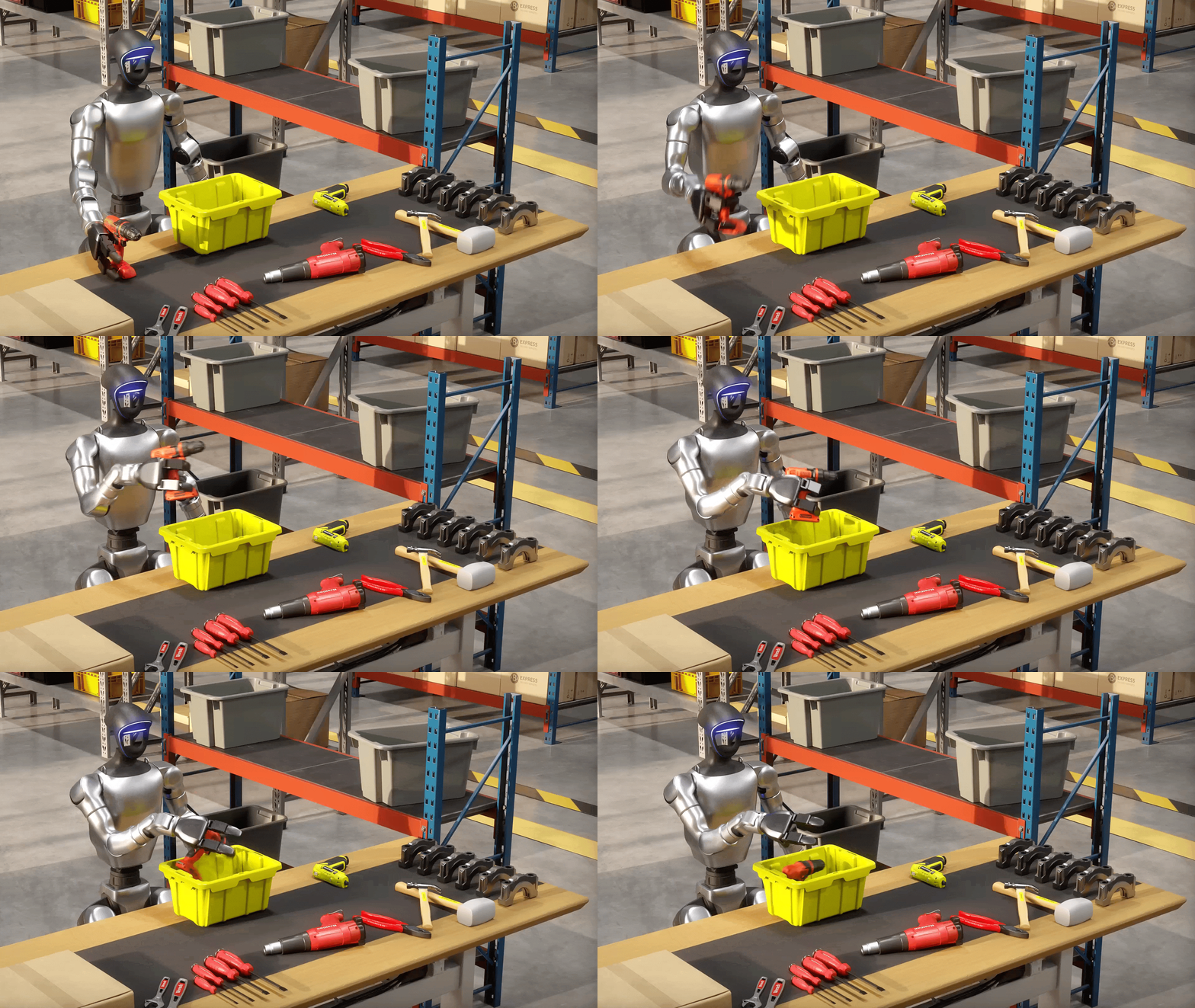
NVIDIA has released new open models and frameworks designed to streamline the development of production robots by integrating simulation, robot learning, and embedded compute into unified cloud-to-robot workflows. The tools aim to reduce friction in moving AI systems from simulated environments to real-world robotic hardware. This represents a shift toward making robot development more accessible and faster by consolidating previously fragmented tooling and infrastructure layers.
TL;DR
- NVIDIA released open models and frameworks targeting the simulation-to-production gap in robotics development
- The tools integrate simulation, robot learning, and embedded compute into cohesive cloud-to-robot workflows
- Focus on reducing friction between virtual training environments and real-world robotic deployment
- Open-source approach aims to accelerate adoption and standardization in the robotics AI space
Why It Matters
Robotics has long struggled with the sim-to-real transfer problem, where models trained in simulation often fail to generalize to physical hardware due to domain gaps. By bundling simulation, learning, and edge compute into a unified framework, NVIDIA is addressing a fundamental bottleneck that has slowed commercial robotics deployment. This consolidation could meaningfully reduce development cycles and lower barriers to entry for teams building production robots.
Business Impact
For robotics startups and enterprises, faster iteration from simulation to production directly translates to shorter time-to-market and lower development costs. Open models and frameworks reduce vendor lock-in and allow teams to customize solutions for specific use cases without rebuilding infrastructure from scratch. This could accelerate adoption of AI-powered automation across manufacturing, logistics, and other industries where robotics ROI has been constrained by long development timelines.
Key Implications
- Open-source robotics frameworks may become table stakes, shifting competitive advantage toward domain expertise and application-specific optimization rather than proprietary infrastructure
- Standardized cloud-to-robot workflows could enable faster knowledge transfer and collaboration across the robotics ecosystem, similar to how open ML frameworks accelerated AI adoption
- Embedded compute integration suggests NVIDIA is positioning itself as the default inference layer for production robots, potentially expanding its TAM beyond data centers into edge and robotics hardware
What to Watch
Monitor adoption rates among robotics startups and enterprises over the next 6-12 months to gauge whether these tools genuinely reduce development friction or remain niche. Watch for competing frameworks from other infrastructure providers and whether the open-source approach attracts meaningful community contributions. Track whether sim-to-real transfer quality improves measurably with these tools, as that will determine their actual impact on production deployment timelines.
Subscribe to the newsletter
The latest stories and analysis, delivered to your inbox.
Free. No spam. Unsubscribe any time.